 Premium
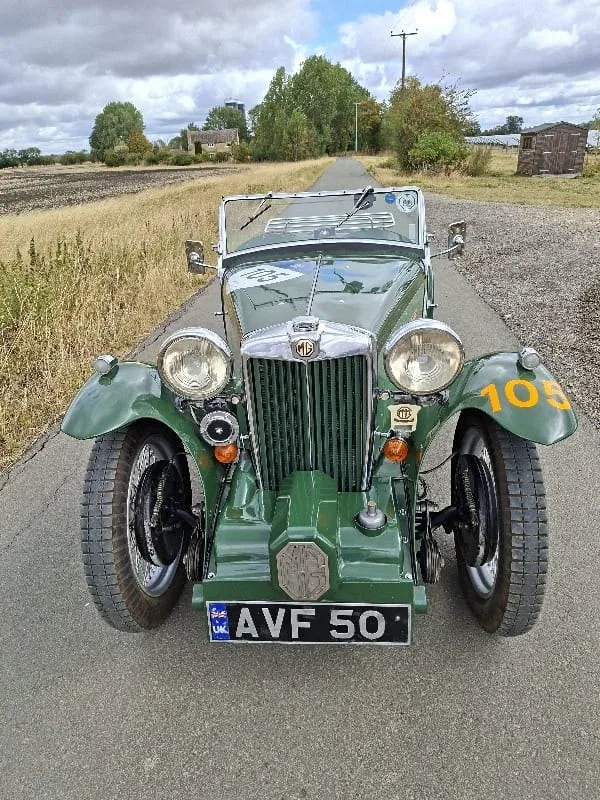
 MG1935 PB







visitas + esta semana
Precio
Precio a consultar
ASTON MARTIN DB2
The 1953 Aston Martin DB2 carrying the registration VDV 418, chassis LML/50/322, is a particularly interesting and desirable example of the early post-war Aston Martin sports car. Its history is unusually well documented, and its long association with enthusiast and collector Jens Pilo, together with its competition preparation and Mille Miglia eligibility, gives it considerably more character than an ordinary DB2. The birth of the DB2 The DB2 was the car that established Aston Martin as a serious manufacturer of high-performance sports cars in the post-war era. The story began with David Brown's acquisition of Aston Martin in 1947, followed shortly afterwards by the purchase of Lagonda, bringing the talents of W. O. Bentley and his engineering team into the organisation. The new Aston Martin combined a sophisticated chassis with the magnificent 2.6-litre twin-cam straight-six developed from the Lagonda unit. The result was the DB2, unveiled in production form in 1950. It was a considerable step forward from the pre-war Aston Martins. The DB2 offered genuine high-speed performance but retained the refinement expected of a British grand tourer. Contemporary road tests were extremely complimentary, with The Motor praising its performance, road holding and comfort. The DB2 also established the basic philosophy that would become synonymous with the David Brown era of Aston Martin: a beautifully engineered, fast and sophisticated sports car capable of being driven across Europe at high speed. Chassis LML/50/322 LML/50/322 belongs to the later production run of DB2s and was completed in 1953. The Aston Martin chassis records compiled by specialist historians identify LML/50/322 as a right-hand-drive DB2 Sports Saloon. Interestingly, the surviving factory research does not currently list its engine number, although the chassis itself is firmly recorded. The car was registered VDV 418 and made its debut on the road in April 1953. Its first known owner was: H. L. Quartermain East Virginia Water, Surrey Quartermain acquired the Aston Martin through a Brooklands dealer, placing the car in an appropriate environment from the outset. At delivery it was finished in Deep Carr Green with a Beige interior, a particularly traditional Aston Martin colour combination. The fact that the car was already being sold through the Brooklands connection is interesting. Brooklands had ceased racing in 1939, but the name remained strongly associated with Britain's sporting motor culture, and the area was still an important centre for performance cars and specialists. The Vantage connection One of the most important aspects of VDV 418 is that it is described as a DB2 Vantage. The Vantage specification was one of Aston Martin's earliest attempts to extract greater performance from its standard road cars. The engine was developed with higher-performance specification, giving the car greater power and sharper performance while retaining the essential refinement of the DB2. For a collector, this makes VDV 418 considerably more interesting than a standard DB2. The Vantage specification is particularly significant because it connects the car directly with the beginning of a tradition which Aston Martin would continue for decades. The word "Vantage", which today denotes Aston Martin's best-known sporting models, first appeared in this context during the DB2 era. Early life and mechanical history The surviving history file provides a fascinating insight into how the car was maintained during its early decades. A particularly important event occurred in 1965, when the engine received a substantial rebuild. The work was extensive and included numerous new components together with a new clutch, propshaft and exhaust pipes. This is significant for two reasons. First, it demonstrates that the car was being properly maintained rather than simply stored away. Secondly, it helps explain why VDV 418 was capable of surviving into the modern era as a usable sporting Aston Martin rather than merely as a static collector's car. The Jens Pilo years Perhaps the most important chapter in the modern history of VDV 418 began when it entered the collection of the late Jens Pilo. Pilo owned the car for approximately 35 years, making his ownership one of the defining periods in its history. Rather than treating the DB2 as a museum piece, Pilo used and developed it as a proper historic sporting car. The car was maintained extensively throughout his ownership, with records covering both major restoration work and routine servicing. This is an important distinction. Many surviving early DB2s have spent considerable periods in collections or have been restored primarily for concours presentation. VDV 418, by contrast, developed a reputation as a usable, competition-prepared Aston Martin. Prepared for historic competition Under Pilo's ownership, VDV 418 was prepared for competitive rallying at a high level. This gives the car a fascinating second life. The DB2 was conceived as a sporting road car, but its combination of relatively light weight, strong straight-six performance, excellent handling and long-distance ability made it particularly suitable for historic rallies. In 2001, VDV 418 completed the demanding Classic Marathon Rally, covering approximately 3,000 miles from Belgium to Croatia. That achievement says considerably more about the car than simply being able to complete a concours judging session. It demonstrated that, more than 48 years after leaving Aston Martin's Newport Pagnell-era predecessor works, the car was still capable of undertaking serious long-distance motoring. The 2003 mechanical rebuild Following its extensive use, VDV 418 underwent another important mechanical overhaul in 2003. The work was entrusted to A. Archer of Great Dunmow, who undertook a comprehensive mechanical rebuild. The work was carefully documented, with records retained in the substantial history file accompanying the car. This further reinforced the car's status as a properly maintained historic sporting machine. Rather than being restored simply to look attractive, considerable attention was given to its mechanical integrity and ability to continue being driven and enjoyed. Mille Miglia eligibility Perhaps one of the most attractive aspects of VDV 418 today is its potential eligibility for the Mille Miglia Storica. The DB2 is one of the most appropriate Aston Martins for the event because the model has genuine period competition credentials and dates from the period covered by the modern Mille Miglia's eligibility requirements. VDV 418 has specifically been described to be Mille Miglia eligible. That qualification is important: eligibility should always be confirmed with the organisers and against the car's complete documentation rather than assumed purely from its model and date. Nevertheless, the combination of its 1953 manufacture, documented history, competition preparation and specification makes it an especially interesting candidate for historic long-distance events. A DB2 built for driving There is something particularly appealing about the history of VDV 418. It has not simply survived for 73 years. It has evolved through several different eras of Aston Martin ownership: 1953 – delivered as a new DB2 to H. L. Quartermain. 1953 – registered as VDV 418. 1965 – major engine work and associated mechanical renewal. Later decades – continued use and maintenance. c.1980s onward – became part of Jens Pilo's collection. 2001 – completed the 3,000-mile Classic Marathon Rally from Belgium to Croatia. 2003 – comprehensive mechanical rebuild by A. Archer. Subsequent years – continued preservation and maintenance. This is a remarkably coherent history for a 1953 Aston Martin. Why VDV 418 is special For a knowledgeable Aston Martin collector, the appeal of VDV 418 lies in the combination of several factors rather than any single feature. 1. It is an early David Brown Aston Martin It belongs to the formative period of Aston Martin's post-war development. 2. It carries the Vantage specification The Vantage name has an extraordinary lineage within Aston Martin history, and its origins can be traced to cars such as this. 3. It retains its original identity The chassis LML/50/322 is well documented and appears consistently in the historical records. 4. It has an unusually interesting ownership history From H. L. Quartermain in Surrey to the long-term stewardship of Jens Pilo, the car has remained in the hands of enthusiasts. 5. It has actually been used The 2001 Classic Marathon Rally is particularly important. This was not a car merely prepared for occasional display. 6. It has substantial mechanical documentation The 1965 engine work and 2003 mechanical rebuild provide valuable evidence of its long-term care. 7. It has historic-event potential Its 1953 date and sporting specification make it potentially suitable for major historic events, including the Mille Miglia, subject to organiser confirmation. The significance of LML/50/322 today VDV 418 represents a fascinating point in Aston Martin's history. The DB2 was the car that transformed Aston Martin from a relatively small British sporting-car manufacturer into a serious international producer of sophisticated high-performance GTs. The subsequent DB2/4, DB3S, DB Mark III, DB4 and ultimately DB5 all developed the ideas established by the DB2. And VDV 418 has an additional quality that is increasingly valued by serious collectors: proven use. It has been driven, rallied, maintained, rebuilt and enjoyed over seven decades. That makes it much more than an attractive 1950s Aston Martin. It is a survivor of the formative David Brown era with a genuine sporting history and a strong connection to the world of historic motoring. In short, VDV 418 is a DB2 with a story — and importantly, a story that can be supported by documentation. Its combination of 1953 production, Vantage specification, long-term ownership, competition preparation, the Classic Marathon Rally and potential Mille Miglia eligibility makes it one of the more interesting DB2s for an enthusiast who intends to actually use the car rather than simply display it.OldLuxury 24 declina cualquier responsabilidad por anuncios falsos, engañosos y/o mendaces, y se reserva cualquier iniciativa oportuna, incluso indemnizatoria, contra los infractores.