



| Marca | ASTON MARTIN | Tipo di auto | Coupé | Guida | Destra |
| Modello | DB2/4 (1953-1959) | Condizione | Restaurato | Trazione | Posteriore |
| Versione | MKIII, one of 462 elegant MKIII hatchback (2+2) | Carburante | Benzina | Cambio | Manuale |
| Anno | 1958 | KM | - | Colore | Rosso |
| Marca | ASTON MARTIN | KM | - |
| Modello | DB2/4 (1953-1959) | Guida | Destra |
| Versione | MKIII, one of 462 elegant MKIII hatchback (2+2) | Carburante | Benzina |
| Tipo di auto | Coupé | Trazione | Posteriore |
| Condizione | Restaurato | Cambio | Manuale |
| Anno | 1958 | Colore | Rosso |
| Marca | ASTON MARTIN |
| Modello | DB2/4 (1953-1959) |
| Versione | MKIII, one of 462 elegant MKIII hatchback (2+2) |
| Anno | 1958 |
| Tipo di auto | Coupé |
| Condizione | Restaurato |
| Guida | Destra |
| Trazione | Posteriore |
| Carburante | Benzina |
| Cambio | Manuale |
| KM | - |
| Colore | Rosso |
- Excellent restored condition, reflecting the comprehensive work carried out by Aston Martin heritage dealer Noble House in the Netherlands
- Restoration works performed by Noble House amounting to €152,600
- One of 462 elegant MKIII hatchback (2+2) saloons, it stands as one of Aston Martin’s most collectible post-war grand tourers
- The Mk III combined refined engineering with a new design that would influence Aston Martin styling for decades, most notably through the adoption of the grille shape that would later appear on the DB4, DB5, and DB6
- Its rarity, historical importance, and rising appreciation in the market make it not just a memorable car to drive, but also a sound and enduring investment for any serious collector
During the years 1955 to 1958, Aston Martin was steadily shaping the identity that would one day make it one of the world’s most admired sports-car builders.
Under David Brown’s leadership, these were years of determined refinement: engines became more sophisticated, chassis more capable, and the brand’s understated elegance began to take clear form.
At the same time, Aston Martin’s competition efforts were bringing valuable experience back into the road-car program, influencing every model that left the Newport Pagnell factory.
It was in this atmosphere of progress and ambition that the Aston Martin DB 2/4 Mk III emerged.
Introduced in 1957 and produced through 1959, the Mk III represented the most advanced evolution of the DB2 family.
The Mk III combined refined engineering with a new design that would influence Aston Martin styling for decades, most notably through the adoption of the grille shape that would later appear on the DB4, DB5, and DB6.
Because Aston Martin was still a small maker, and because much of the work was done by hand, the DB Mk III was destined to be rare.
Between 1957 and 1959, just 551 examples left Newport Pagnell:
– 462 elegant 2+2 saloons
– 84 Tickford Drophead Coupés
– 5 fixed-head two-seaters
Each one was subtly different, variations in trim, in choice of instruments, in the quiet decisions of craftsmen whose names are now forgotten.
These numbers already make the 1958 Mk III one of the rarer Aston Martin road models of the era.
ABOUT THIS SPECIFIC EXAMPLE
This specific Aston Martin DB 2/4 Mk III began its story in the spring of 1958.
The Aston was delivered new on 1 May 1958 through the agent H&G Robinson to its first owner, Dr. E. Babst of Wallsend-on-Tyne.
Registered as NNL 5, the car entered the world with the understated elegance typical of the Mk III, the last and most refined evolution of the DB2 lineage.
For more than two decades, the Aston remained in medical hands: first with Dr. Babst, then with Dr. Reid, and later Dr. Hamilton.
Each steward cared for it in turn, adding quiet chapters to its early life until 1981, when it passed to Mr. Gervase Hulbert.
Under Hulbert’s enthusiastic ownership, the Mk III left its quiet domestic existence and began to stretch its legs in earnest.
In 1984, the car changed hands again, this time to Mr. Nicholas Masheter, who would play a crucial role in preserving and presenting the car’s heritage.
It appeared at the 1985 British Motoring Festival in Birmingham, and in 1992, after being re-registered as JSK 142, it was featured proudly on the Aston Martin Owners Club stand at the Classic Car Show.
The car then entered an active touring life, traveling across Britain and Europe with confidence and charm.
Throughout the 1990s and 2000s, this Aston Martin became a familiar participant in club events and long-distance tours, building a reputation as much for reliability as for elegance.
It took part in the Tour of Snowdon after winning The Wild Pheasant Cup (concours), joined the Llangollen Norwich Union RAC Classics in 1996 and ’97, celebrated the Mk III’s 40th Birthday Parade at Silverstone in 1997, explored the Loire in ’98, and ran the AXA RAC Classic in ’99.
The new millennium saw it on the Balmoral Highland Jog in 2000, the NATO Tour in 2004, and several AMOC Club Tours between 2005 and 2007.
In 2008, it returned to the Loire, including the storied Le Mans Classic, and even took part in a dash from Le Touquet to Geneva, retracing the tyre tracks of James Bond’s own fictional DB Mk III.
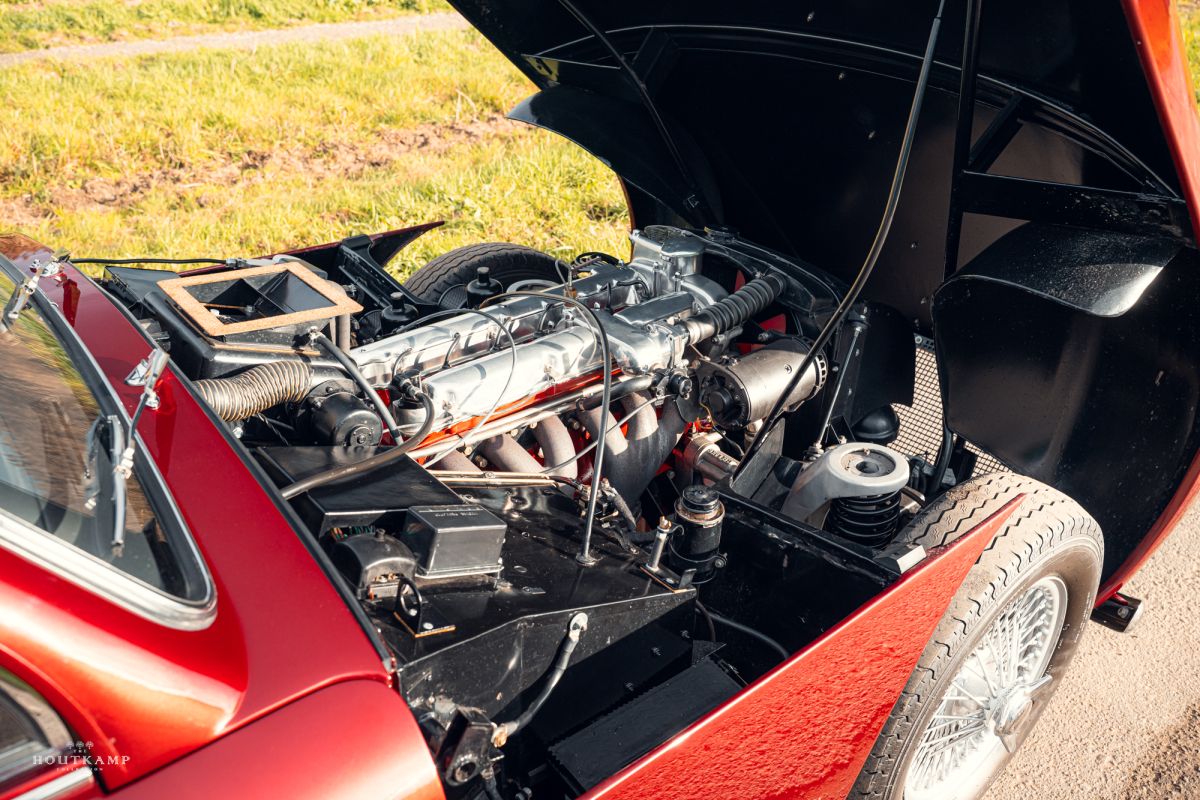
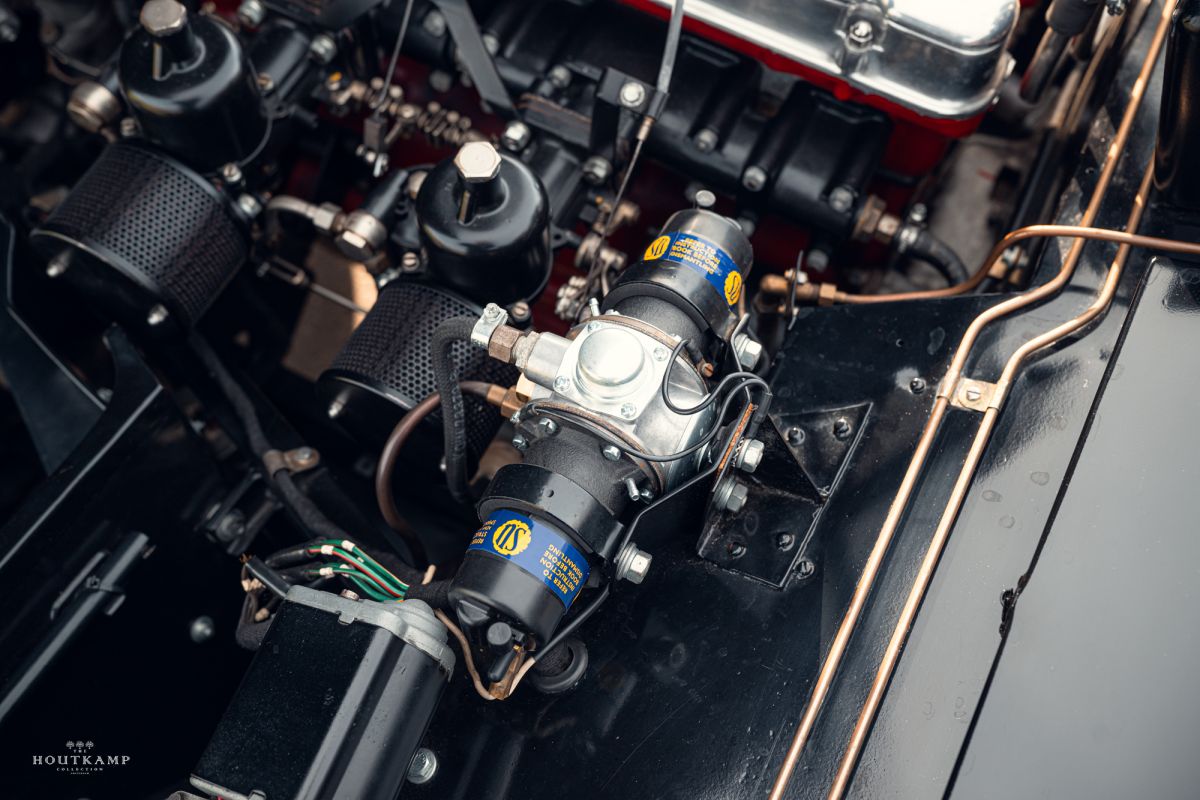
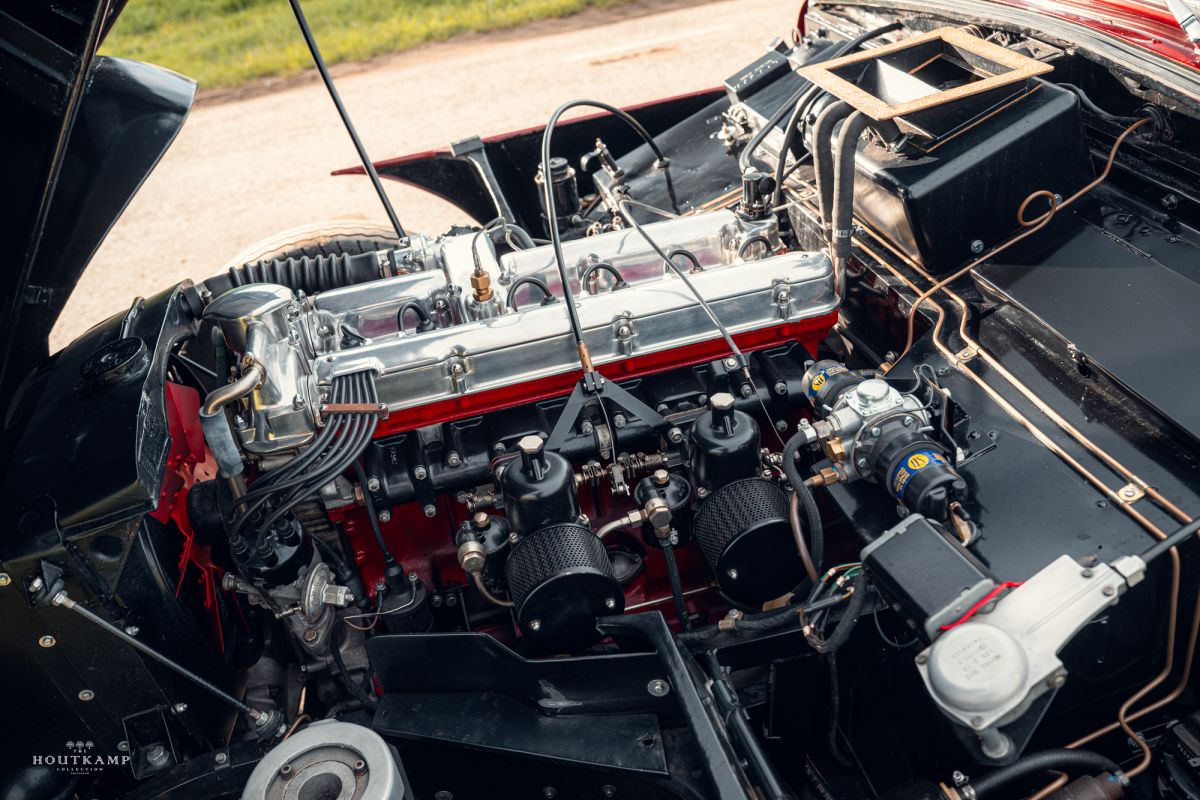
Renowned Aston Martin specialists R.S. Williams performed a significant upgrade, rebuilding the engine with an unleaded-compatible aluminium head, Cosworth pistons, Carrillo con-rods, and electronic ignition.
They also rebuilt the gearbox and fitted a DB5 diaphragm clutch, while refreshing the chassis with new bushes, aluminium mounting blocks, front stub axles, and overhauled brakes, preparing the car for many more years of spirited use.
Over time, ownership shifted through enthusiasts including Alan John Cramp, Harald Martin Seifert, and Robert Heller, with the car registered in both the UK and Germany.
In September 2010, it was sold at the Bonhams Goodwood Revival.
Shortly after, the car crossed the Channel and on 9 June 2011, it was registered in Germany, its new custodian Harald Martin Seifert of Ulm.
Then, on 30 April 2013, it returned to the UK under the ownership of Robert Heller of London, continuing its tradition of passing between passionate individuals who valued its heritage.
Most recently, recognizing the value and significance of the car, its custodians entrusted the bodywork to Noble House, the Dutch marque specialists.
What began as body attention evolved into a full, documented restoration, ensuring that this Mk III, with its long, well-lived history, would continue into the future with renewed grace.
The invoices issued between January 2014 and February 2016 relate to restoration works carried out by Noble House, amounting to a total of €152,600.
In addition, there have been recent maintenance works undertaken in 2022–2023 by the Aston Martin specialists Pugles & Lewis in London, further ensuring the car’s mechanical health and continued readiness for the road.
CONDITION EXTERIOR
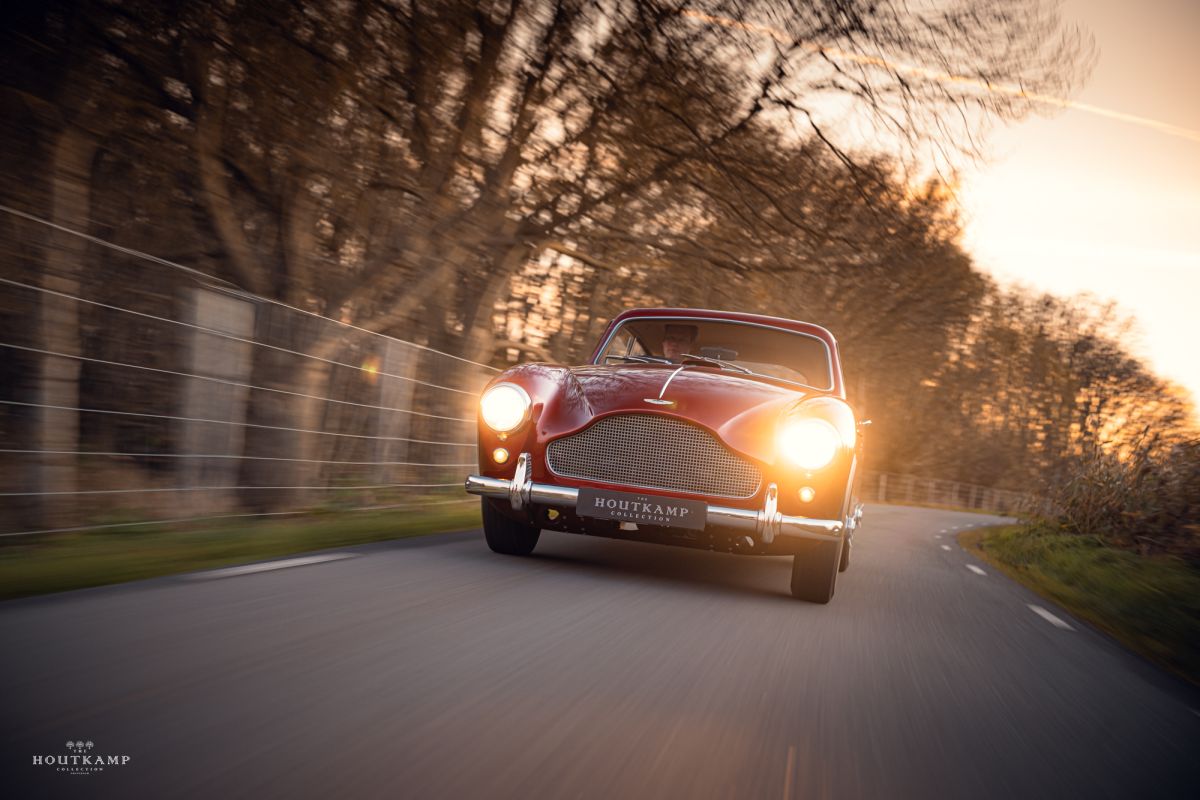
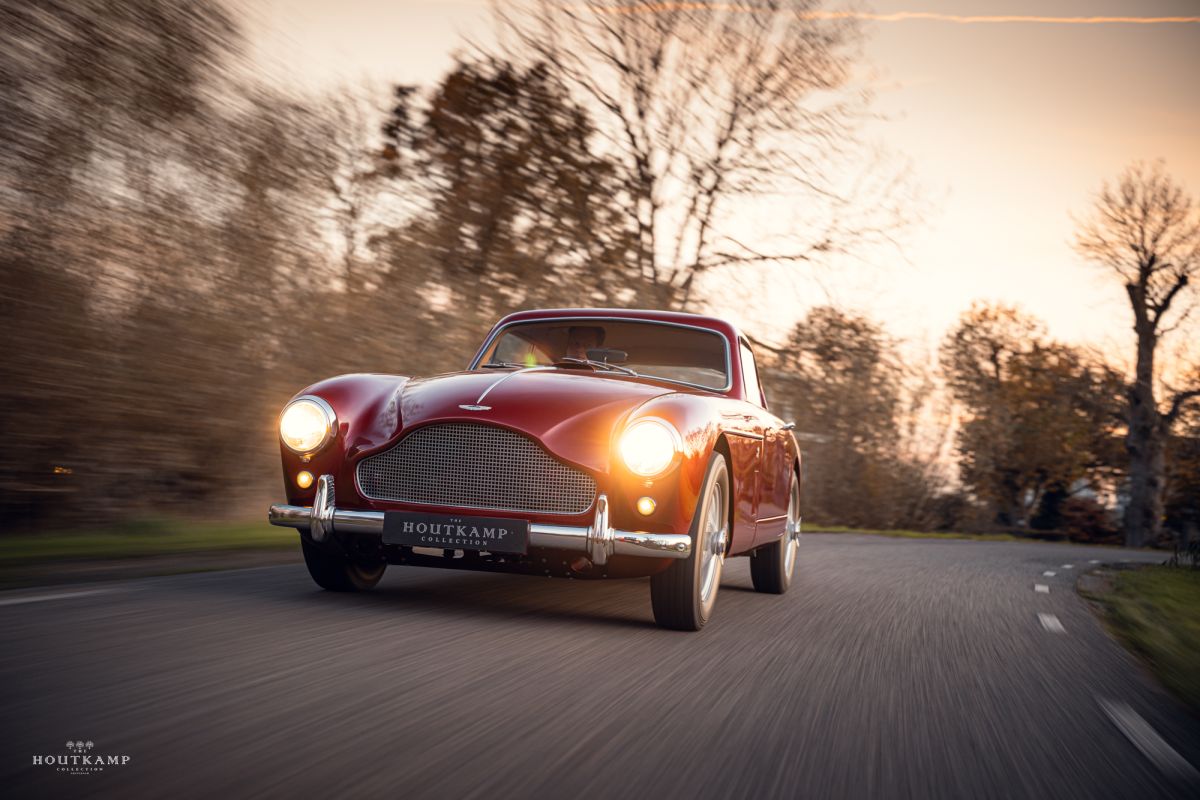
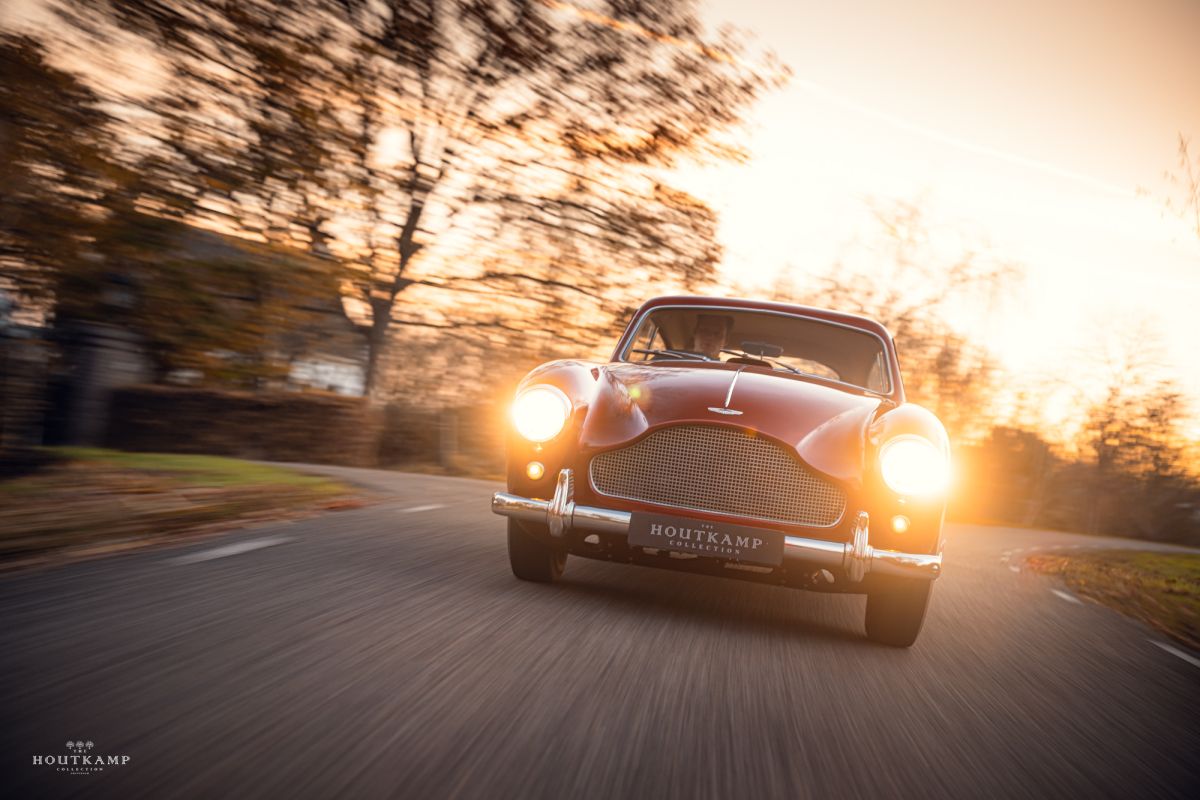
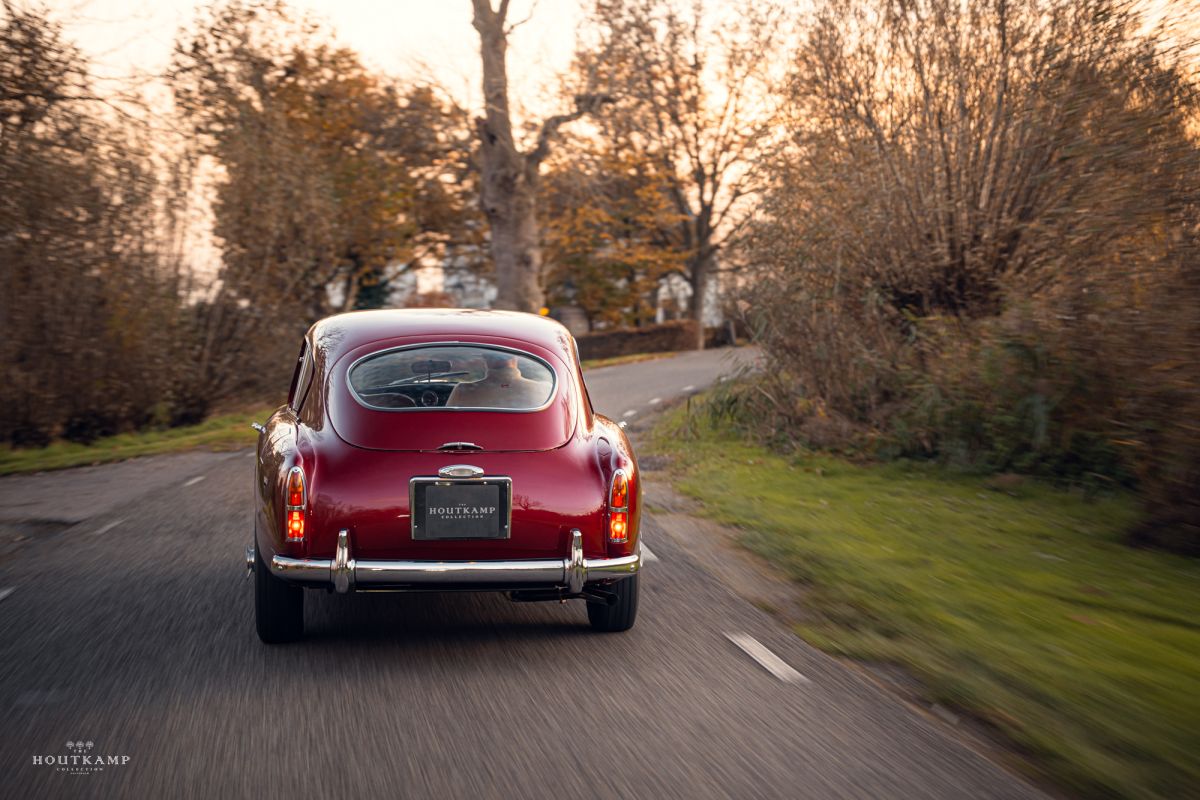
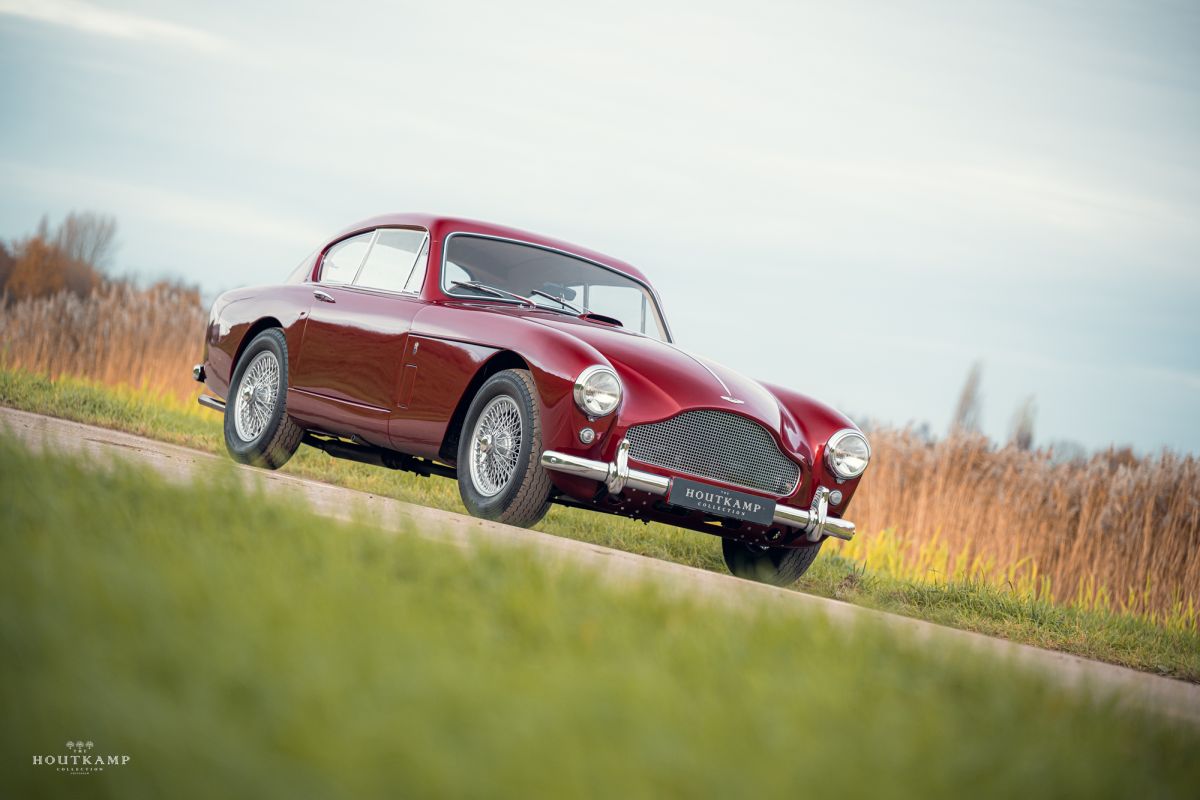
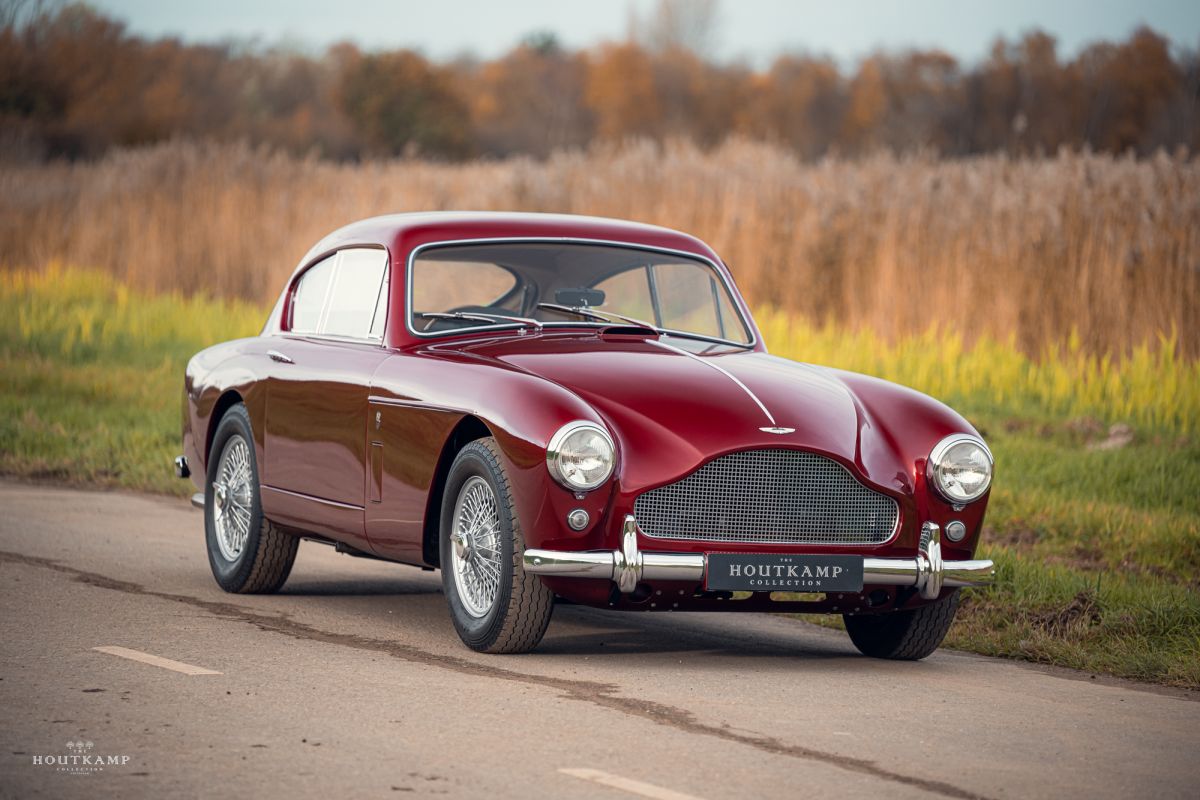
The bodywork presents in excellent restored condition, reflecting the comprehensive work carried out by Noble House in the Netherlands.
The elegant lines are beautifully preserved, with all panels expertly aligned and free from any visible dents or imperfections.
The Deep Red Metallic paint exhibits a rich, even lustre, highlighting the car’s graceful curves and classic proportions.
Chrome detailing, including bumpers, window surrounds, and trim, has been carefully refurbished to a mirror-like finish, harmonizing with the body’s deep red hue.
All exterior fittings, including lights, badges, and mirrors, appear original and correctly positioned, reflecting meticulous attention to authenticity.
The car sits on period-correct wheels, finished to a high standard and fitted with quality tires, completing its poised, classic stance.
Overall, the exterior condition reflects a combination of meticulous restoration and careful use, presenting a visually striking and highly authentic example.
CONDITION INTERIOR
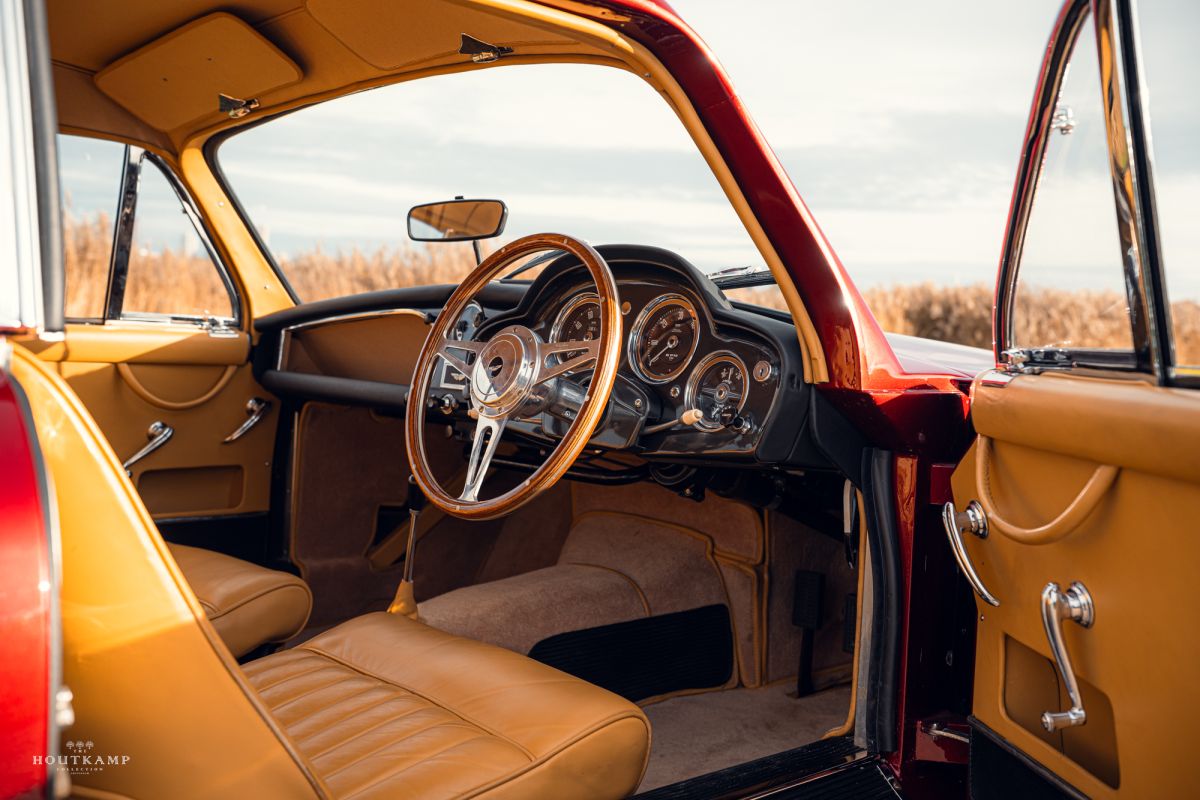
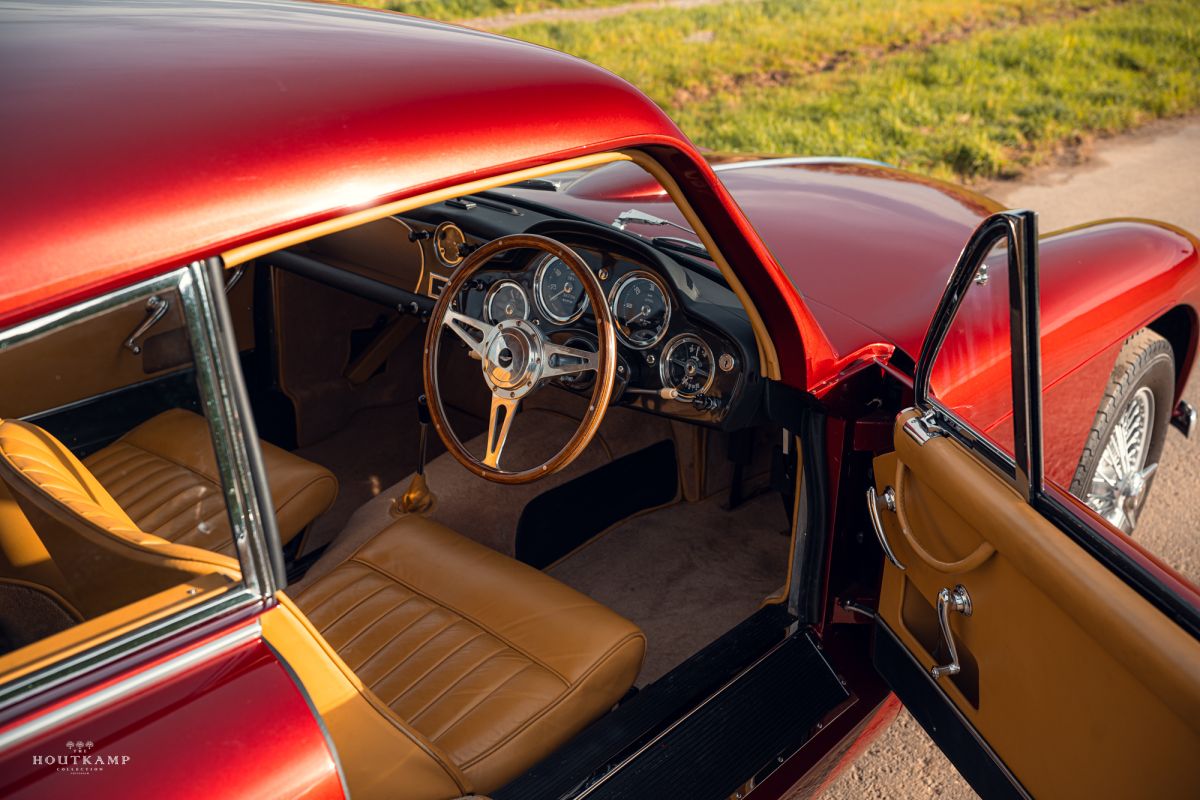
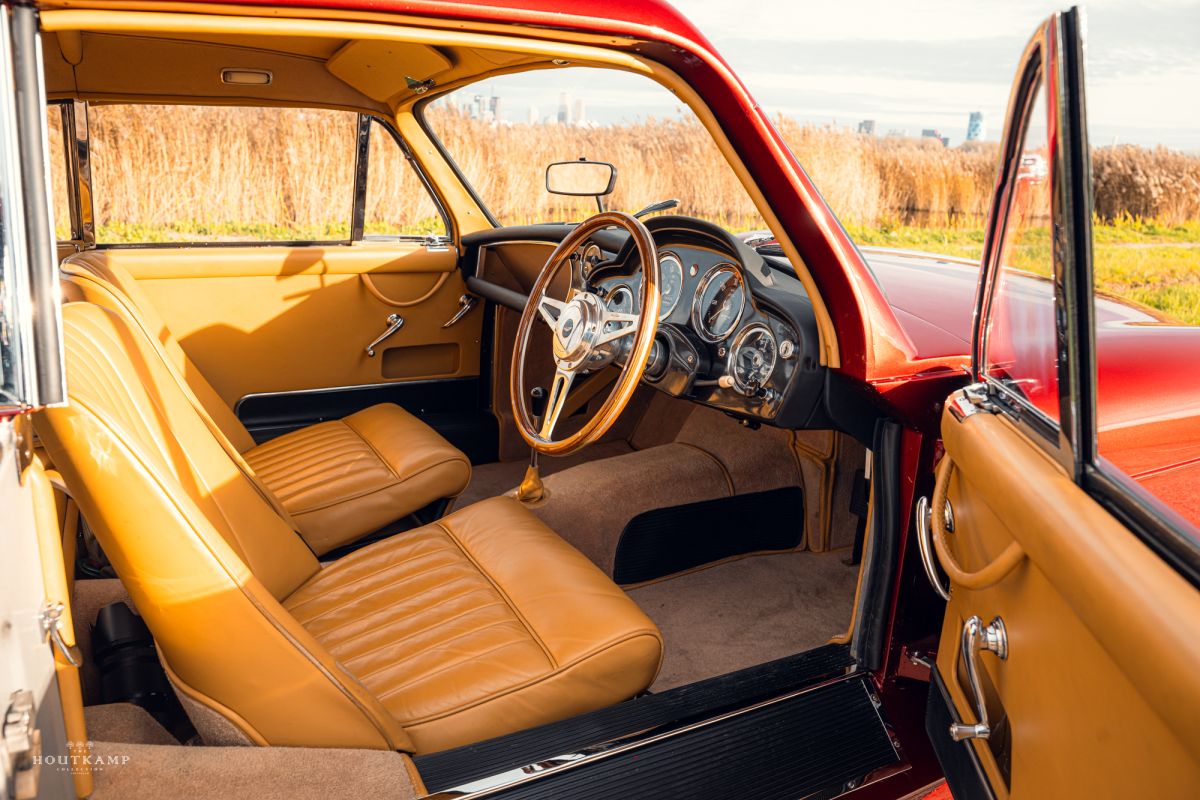
Stepping inside the cabin of this DB 2/4 Mk III reveals an interior restored to a beautifully authentic and inviting standard.
The upholstery presents in excellent condition, with the seats showing the lightest signs of careful use, their stitching crisp and their contours retaining the proper period shape.
The leather surfaces display a supple texture and a rich tone, the dashboard is clean and correct, with all instruments clear, functional, and set within attractively restored bezels.
Switchgear and controls show minimal wear, reflecting both the quality of the restoration and the attentive stewardship of past owners.
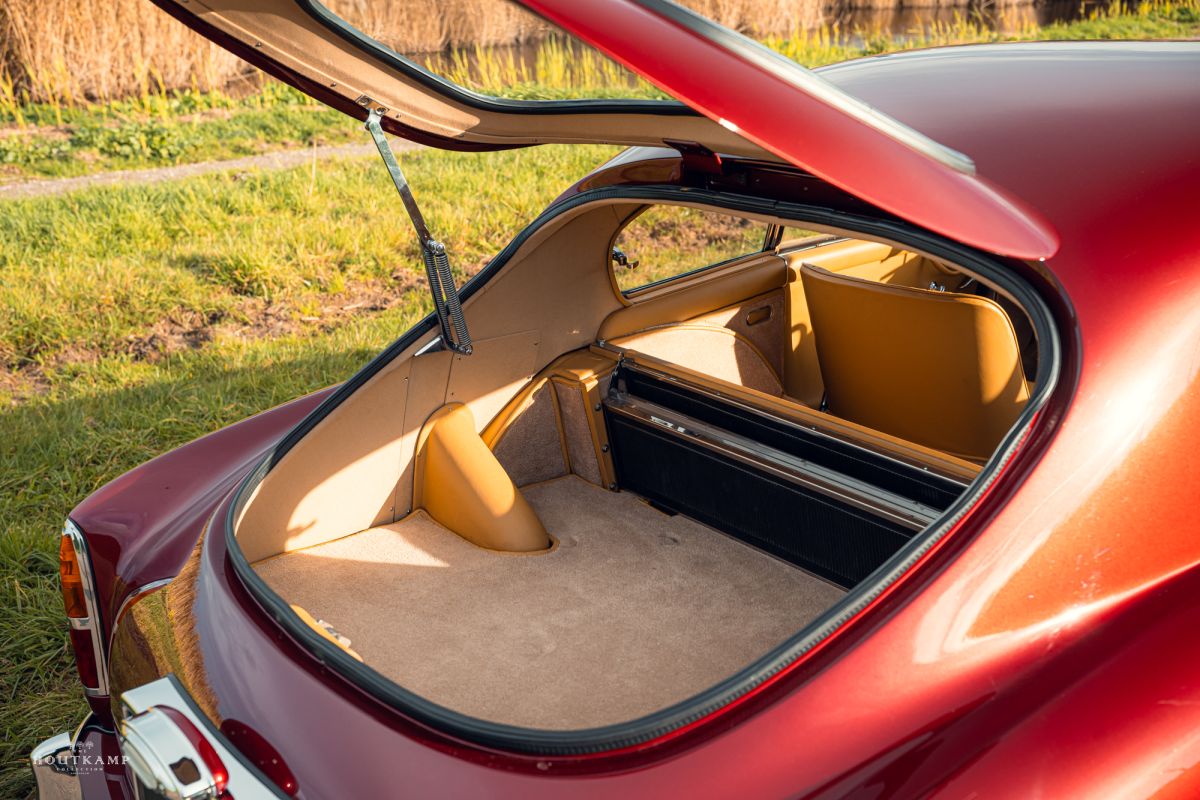
Carpets, door panels, and headlining appear fresh and well fitted, completing the impression of a cabin that is both true to original specification and ready for continued enjoyment.
Overall, the interior is refined, comfortable, and meticulously preserved.
DRIVING EXPERIENCE
From behind the wheel, this DB 2/4 Mk III immediately reveals why it is regarded as one of the most accomplished Aston Martins of the 1950s.
The upgraded and rebuilt engine provides smooth, eager power delivery, while the aluminium head, Cosworth pistons, and electronic ignition contribute to excellent responsiveness and reliability.
The gearbox, also rebuilt, shifts with precision.
Steering is direct and communicative, allowing the driver to place the car confidently through sweeping roads or tighter sections.
Adding to the pleasure of driving is the knowledge that very few cars offer this combination of heritage and capability.
With just 462 Mk III saloons ever built, surviving examples in restored condition are rare, and those with this level of documented provenance and mechanical preparation are rarer still.
For these reasons, every journey feels special, and every mile reinforces the car’s place among Aston Martin’s most collectible post-war grand tourers.
Its rarity, historical importance, and rising appreciation in the market make it not just a memorable car to drive, but also a sound and enduring investment for any serious collector.
The information provided on this website has been compiled by The Houtkamp Collection with the utmost care. The information contained within this advert is provided ‘as-is’, without warranties as to its accuracy whether expressed or implied and is intended for informational purposes only. The Houtkamp Collection is not liable for any errors or mistakes.

The Houtkamp Collection
1191 KN Ouderkerk aan de Amstel - Holland NL
+31 (0)6 2509 8150
https://houtkamp.nl/

OldLuxury 24 declina ogni responsabilità in ordine ad eventuali annunci falsi, ingannevoli e/o mendaci, e si riserva comunque ogni e più opportuna iniziativa, anche risarcitoria, nei confronti dei trasgressori.