


| Marca | LANCIA | Tipo di auto | Cabrio/Roadster | Guida | Destra |
| Modello | Augusta | Condizione | Restaurato | Trazione | Posteriore |
| Versione | Convertible | Carburante | Benzina | Cambio | Manuale |
| Anno | 1934 | KM | 2000 | Colore | Rosso |
| Marca | LANCIA | KM | 2000 |
| Modello | Augusta | Guida | Destra |
| Versione | Convertible | Carburante | Benzina |
| Tipo di auto | Cabrio/Roadster | Trazione | Posteriore |
| Condizione | Restaurato | Cambio | Manuale |
| Anno | 1934 | Colore | Rosso |
| Marca | LANCIA |
| Modello | Augusta |
| Versione | Convertible |
| Anno | 1934 |
| Tipo di auto | Cabrio/Roadster |
| Condizione | Restaurato |
| Guida | Destra |
| Trazione | Posteriore |
| Carburante | Benzina |
| Cambio | Manuale |
| KM | 2000 |
| Colore | Rosso |
The 1934 Lancia Augusta Cabriolet is a fascinating piece of automotive history that reflects the innovation and elegance of Italian car design during the interwar period. Here's a detailed look into its story and historical significance:
Overview of the Lancia Augusta
Manufacturer: Lancia & C. Fabbrica Automobili (Turin, Italy)
Production years: 1933–1936
Class: Small luxury car (mid-size saloon and cabriolet)
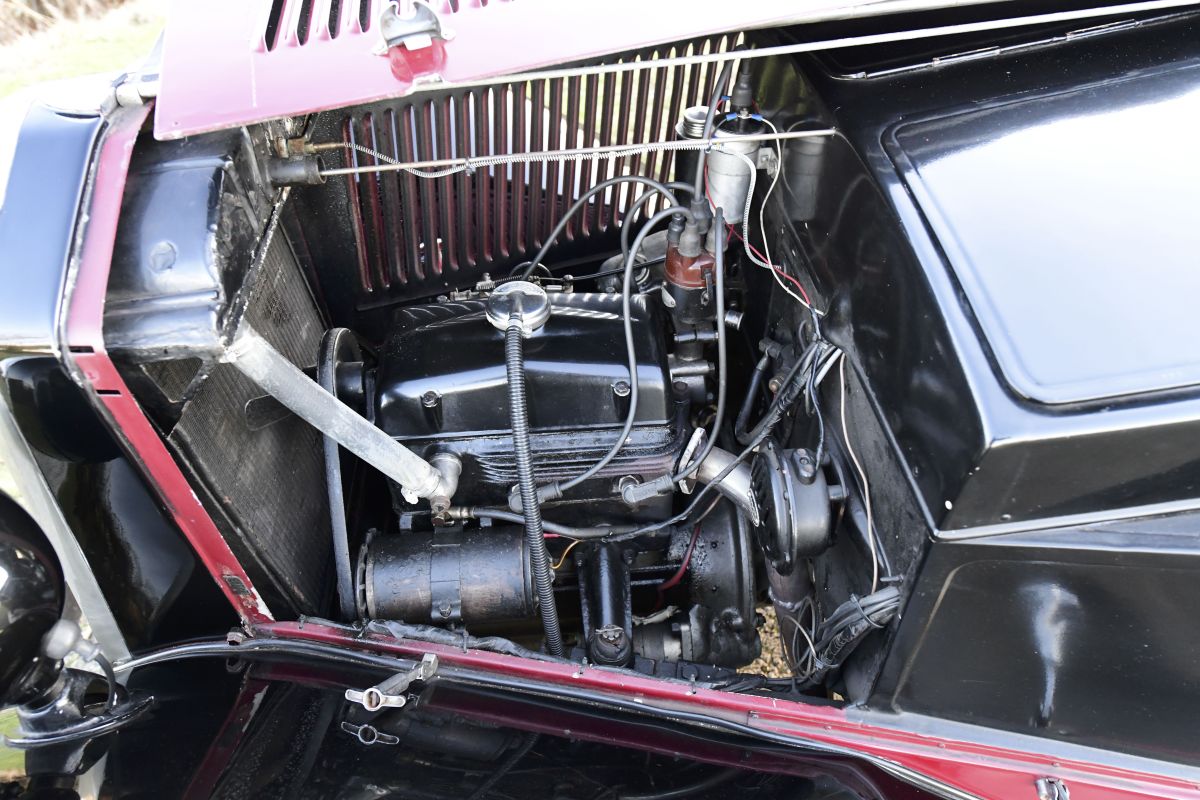
Engine: 1,196 cc narrow-angle V4 (35 hp)
Top speed: Approx. 110 km/h (68 mph)
The Lancia Augusta (known as the Lancia Belna in France) was introduced in 1933 as a compact luxury car positioned just below the larger Lancia Artena and Astura models. The cabriolet (convertible) version offered an open-top alternative with the same refined mechanics and engineering.
Innovative Engineering
Vincenzo Lancia was an engineer before he was an automaker, and the Augusta showcased his obsession with innovation:
Monocoque Body: The Augusta was one of the earliest cars to feature a unitary body-shell (monocoque) construction, which made it lighter and stiffer than competitors.
V4 Engine: Its narrow-angle V4 engine was compact, smooth, and mechanically sophisticated for its time.
Independent Front Suspension: Provided a smoother ride and better handling than the solid axles commonly used in that era.
The Cabriolet Version
The 1934 Cabriolet models were typically bodied by independent coachbuilders such as:
Pinin Farina (before it became Pininfarina)
Stabilimenti Farina
Viotti
Castagna
These custom bodies were often hand-built and tailored to wealthy clients’ tastes, which is why surviving examples can vary significantly in design.
Cabriolets were particularly prized for their elegance and were a symbol of upper-class European motoring.
French Connection: Lancia Belna
Lancia also produced the Augusta in France (1934–1938) at its Bonneuil-sur-Marne factory, where it was sold as the Lancia Belna. Many of the French cabriolet bodies were created by Carrosserie Pourtout, sometimes with designs by Georges Paulin, an early advocate of streamlined, aerodynamic cars.
Some Belna cabriolets even featured Paulin's retractable hardtop roof, the precursor to the modern coupé-cabriolet.
Historical Significance
Luxury for the Middle Class: The Augusta marked a shift toward affordable luxury, targeting middle-class professionals rather than just aristocrats.
Innovation Benchmark: It was one of the most advanced small cars of its time, helping to cement Lancia's reputation as a technological leader.
Coachbuilt Legacy: Cabriolet versions were limited in number and are now considered highly collectible classics due to their craftsmanship and rarity.
Decline and Rarity Today
By the end of production in 1936, around 17,217 Augusta units had been built in Italy and another 3,000+ Belna units in France. Only a small fraction were cabriolets, and far fewer have survived to the present day.
Today, a 1934 Lancia Augusta Cabriolet is a rare and valuable collector’s car, admired at Concours d’Elegance and vintage rallies across Europe.
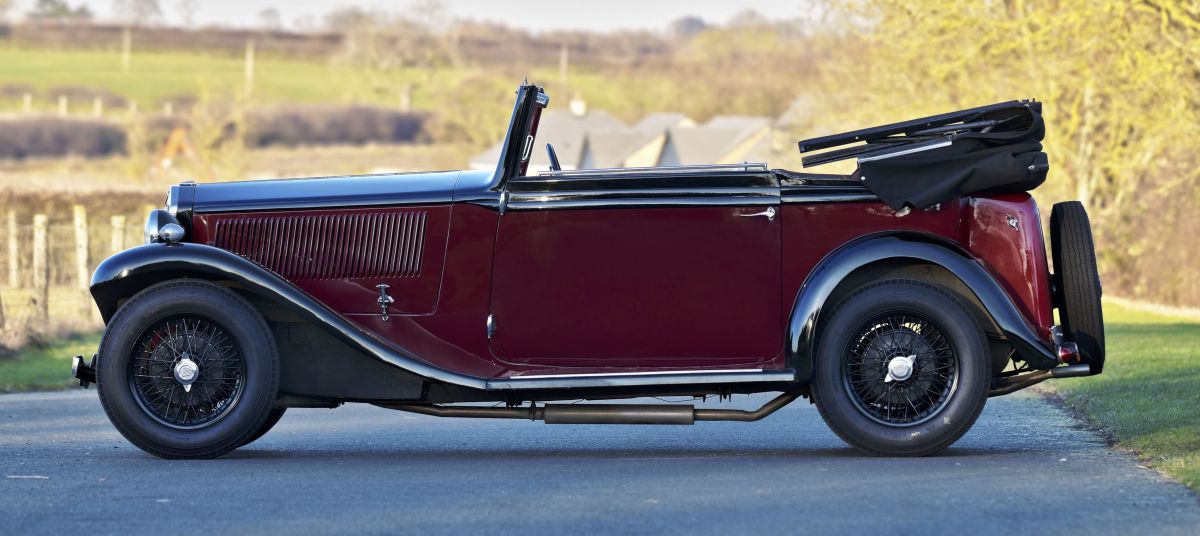
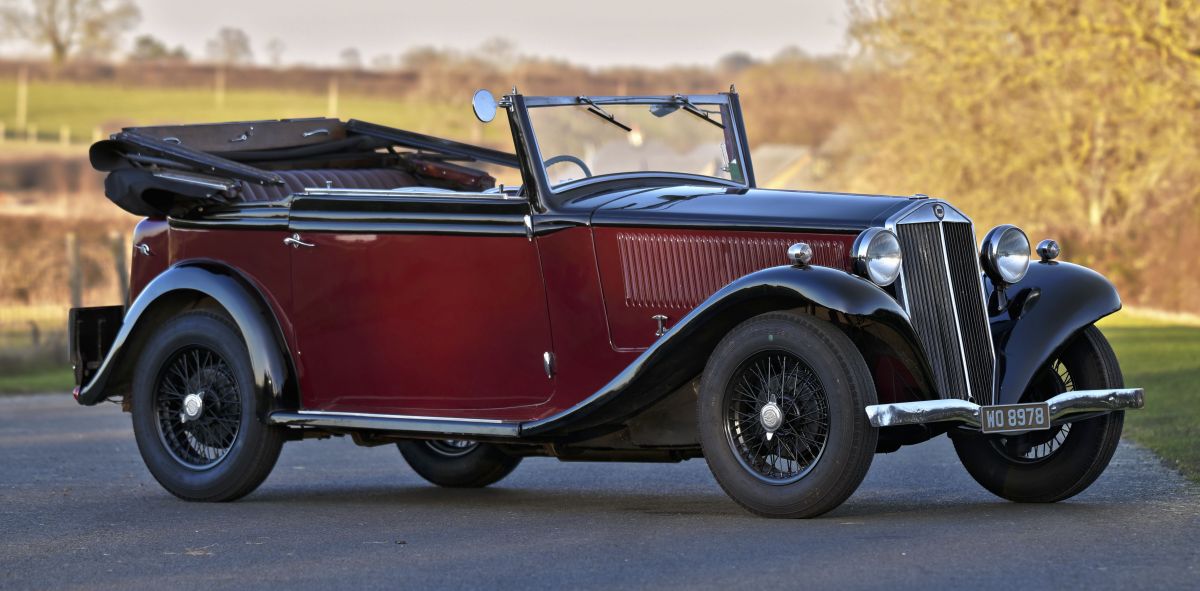
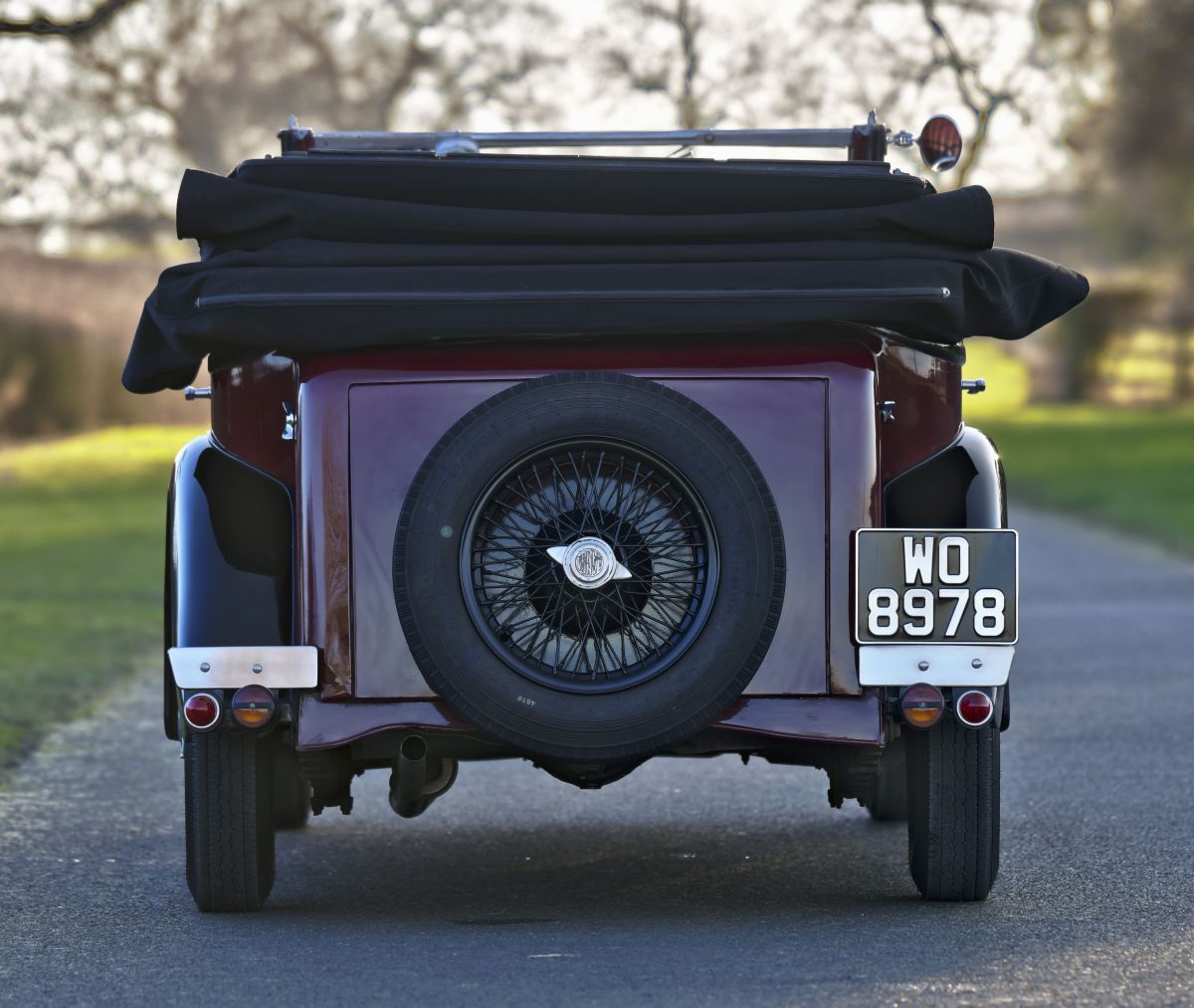
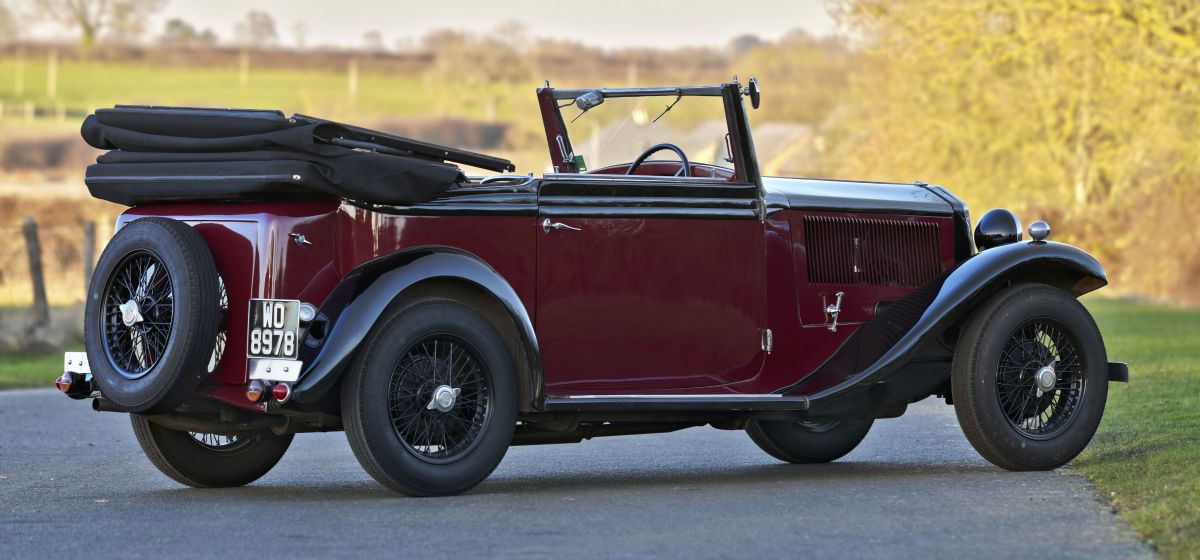
WO 8978 is a very rare Lancia factory produced drop head cabriolet, designed by Battista “Pinin” Farina, one of his first designs. It has wind up windows and a clever spring-loaded hood, which can be erected in seconds. In summer it is a full 4 seat tourer and in the winter with the hood and windows up is as good as any saloon.
The car is a very smart and well sorted car being a regular class and award winner at the VSSC Welsh and Measham Rallies. It won Best Pre-war Car at the 2019 Festival of Transport and featured in July 2019 Auto Italia.
It has a Certificate of Origin from Classiche Lancia, a FIVA I.D. Card, a ACI Fiche certificate, a VSCC Buff Form, and is registered with the Registro 1000 Miglia meaning she is pre-approved and ready for an entry in the Mille Miglia.
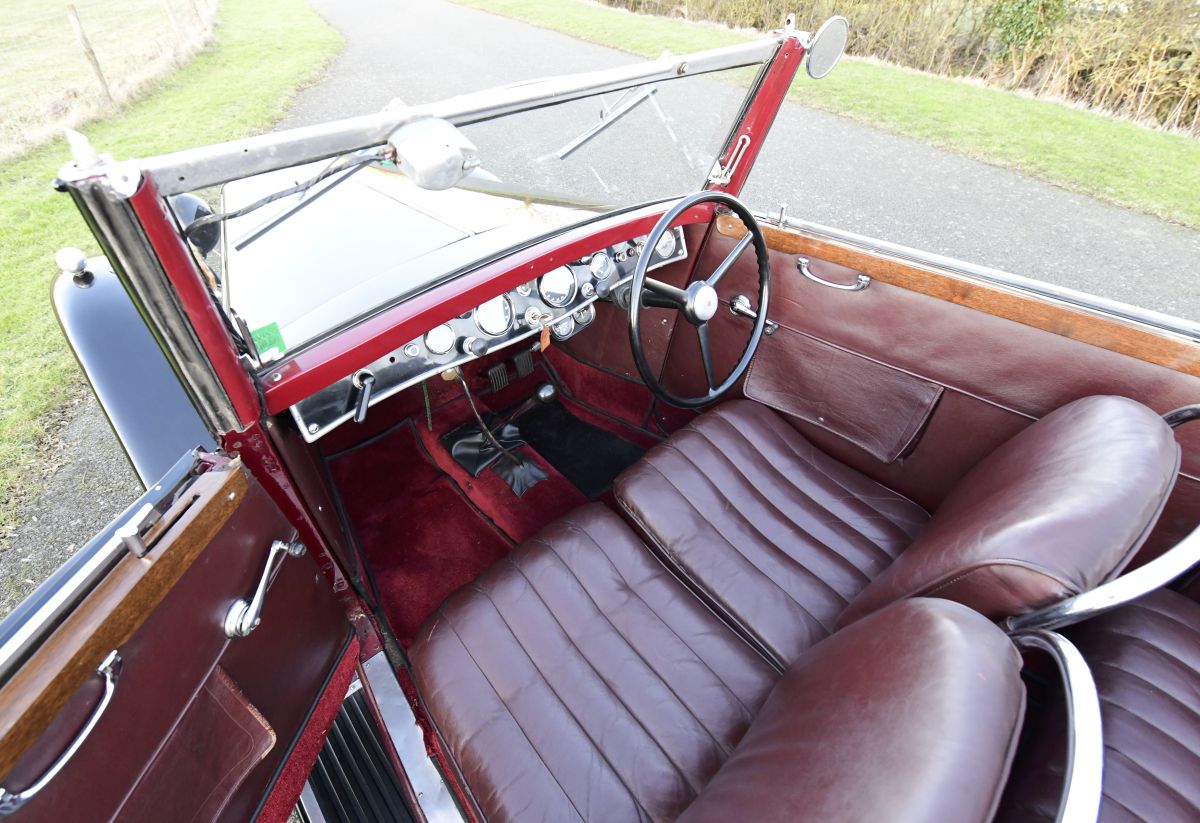
The Lancia engine starts readily and pulls well whilst making all the right Italian noises. A full complement of period instruments are located on the black painted dashboard. The Lancia Augusta Cabriolet is finished in burgundy over black paintwork.
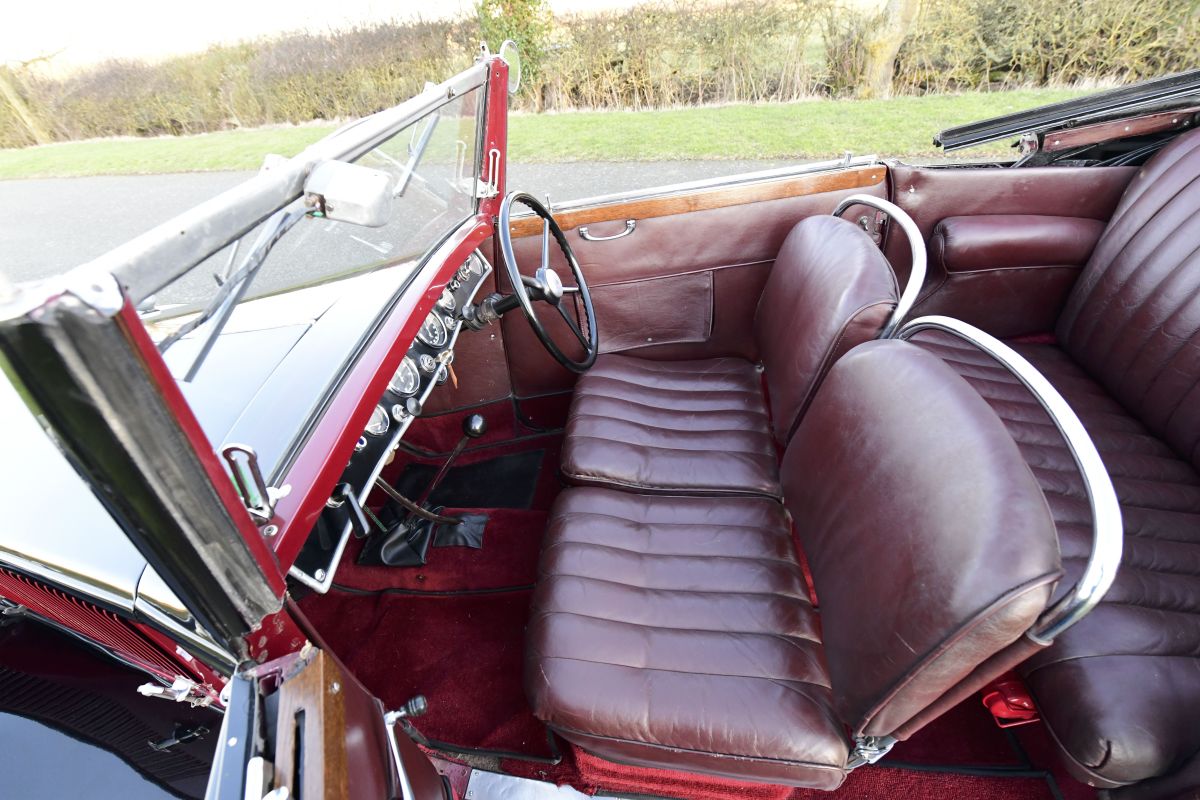
To the interior is burgundy leather with matching door cards and maroon carpets. The car is fitted with four newish tyres and also to the rear mounted spare fitted to the spring-loaded boot lid. The recently rebuilt wire wheels are equipped with Lancia knock off spinner hubs.
The Lancia Augusta Cabriolet has had a fairly comprehensive restoration in recent years and has covered few miles since. It is very useable being spacious and providing comfortable seating for four people. It is also a sprightly perfomaer with a surprising turn of speed from its smooth V4 engine.

Classicmobilia
Milton Keynes GB
+44 07889805432
https://www.classicmobilia.com/

OldLuxury 24 declina ogni responsabilità in ordine ad eventuali annunci falsi, ingannevoli e/o mendaci, e si riserva comunque ogni e più opportuna iniziativa, anche risarcitoria, nei confronti dei trasgressori.