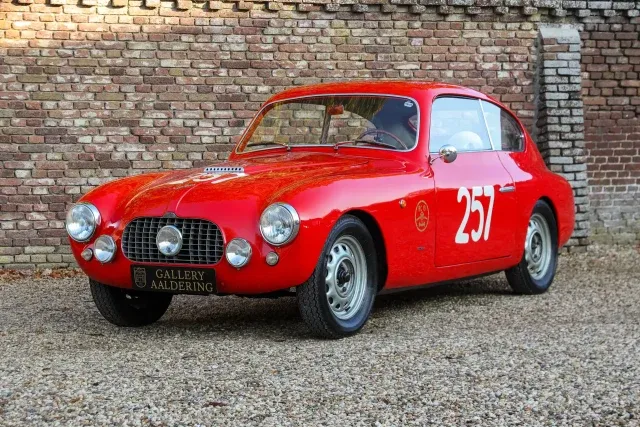
FIAT 1500 1949 Fiat 1500 6C Sport Barchetta
1949 Fiat 1500 6C Sport Barchetta — Bodied by Lanzarone, Stanguellini-Prepared
Post-war Italy produced a whole class of cars that never made it into a catalogue: one-off specials, built by small shops from proprietary parts for drivers who wanted to race. This Fiat 1500 6C Sport is one of them, and it survives with a documented history, a recently completed restoration by a group of Italian artisans, and a story that ties it to the Targa Florio.
Origins and provenance
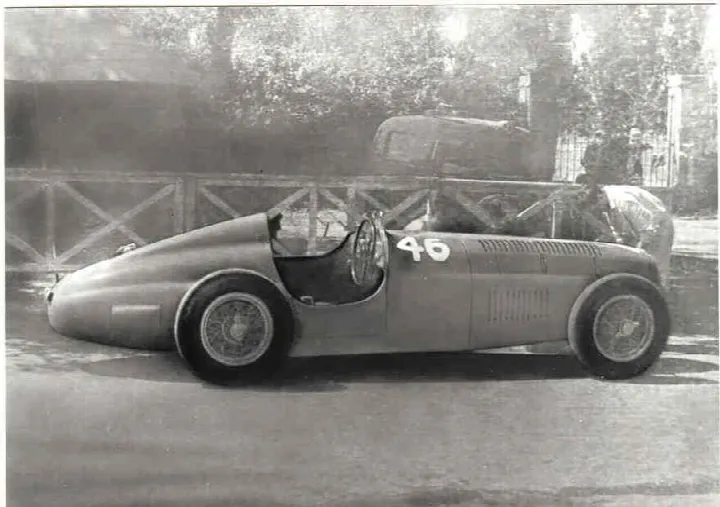
The car was built for Giovanni Casales, a Sicilian gentleman driver who contested the Targa Florio on several occasions at the wheel of a Cisitalia. The 1500 appears to have been commissioned as a back-up machine rather than a primary entry — no record has surfaced of it starting the race, and the current understanding is that it never competed. It remained in Palermo for the greater part of its life before moving north to Tuscany.
Its most recent long-term custodian acquired it in 1988, during a period spent combing Italy for pre- and early post-war machinery. At the time the car was effectively a barn find, sitting largely abandoned under a shelter and wearing a coat of pale yellow over its original red. It then waited roughly a decade before restoration began, as parts were missing and the frame needed attention.
Construction
The chassis is the work of CAMEN — Costruzione Auto e Motori Esposito Napoli — a well-regarded Neapolitan constructor of the period. It combines a Fiat 1500 front section with a portion of a Lancia Aprilia rear frame, an approach typical of the specialist builders of the era.
Over that sits a barchetta body in aero-grade aluminium just 1.8mm thick, with an internal chrome-alloy structure. It is famously difficult material to work: during the restoration, two generations of one coachbuilding family struggled with porosity and weld defects before the youngest member of the shop finally got clean results.
Power comes from the six-cylinder engine, fitted with additional Stanguellini components — the Modena firm whose tuning work on small-displacement Italian machinery is a recognised name in its own right. Top speed is in the region of 160 km/h (100 mph). Among the more unusual details is a Nardi Moretti gear shifter, rarely seen on a Fiat of this type.
Restoration
The restoration was completed in December 2017 and drew on five or six specialist Italian firms. Mechanical work was carried out by the Falanga workshop in Sicily, a shop with prior familiarity with the car; pistons and other internal components were remade, and even the dashboard instruments were gone through.
The chassis came first. The body had been stored on a wooden frame and so escaped damage, but the frame itself had been pulled slightly out of true at some point and required correction. Remarkably, the only body panel absent from the car was the boot lid, which had to be fabricated from scratch. The original Pirelli Stella Bianca tyres fitted in the 1950s were still on the car.
Seats were re-trimmed in Vipla, the hard-wearing synthetic resin material used in the period. The cork-rimmed steering wheel was restored by the owner himself, a carpenter by trade.
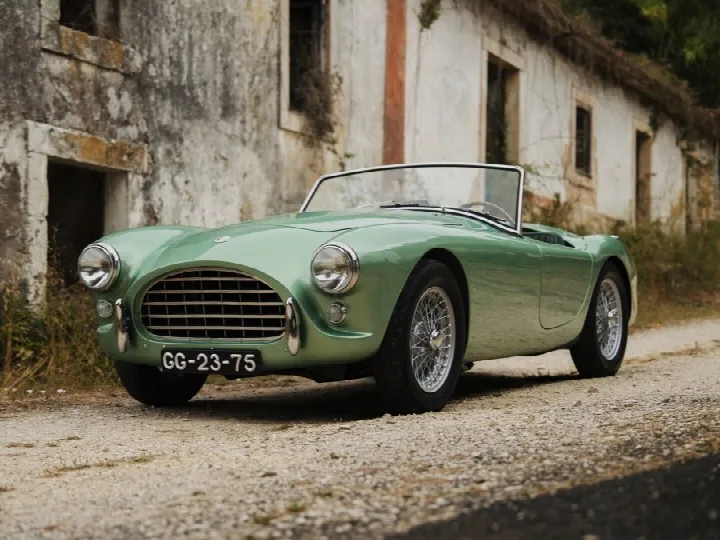
The finish is a two-tone dark red and brown — a combination the coachbuilder initially resisted, and which the owner secured only by agreeing to pay for a complete repaint if it disappointed. It did not.
A Collector’s Dream
This is a car that brings together nearly everything collectors look for in a post-war Italian special. The chassis carries the name of CAMEN, one of Naples' respected constructors. The body is hand-formed alloy by Lanzarone. The engine wears Stanguellini preparation, a mark that still commands attention wherever small-displacement Italian racing machinery is discussed. The first owner, Giovanni Casales, was a genuine Targa Florio competitor, and the car was built to his order for that event — Sicily's greatest road race — which places it squarely in one of motorsport's most romantic chapters.
It has also been unusually well cared for. A single custodian held it for close to three decades, and rather than chase a quick turnaround he waited until the work could be done properly, then entrusted it to five or six of Italy's finest artisan houses. The result is a car that is honest throughout: original Pirelli Stella Bianca tyres, an untouched body that survived the years on its wooden frame, and only a single panel — the boot lid — needing fabrication. Because it was never campaigned, it carries none of the accident damage, replaced sections or rebuilt-after-shunt history that so often complicates cars of this era. What the next owner gets is an exceptionally intact example.
The opportunities are equally broad. Its period, provenance and preparation open doors to the Mille Miglia Storica and the wider European rally and concours calendar, and its concours credentials are already established — it was invited to the Poltu Quatu Classic Concorso di Eleganza in Sardinia immediately following its restoration. Add the two-tone dark red and brown finish, which draws a crowd at every event it attends, and you have a car that is as rewarding to arrive in as it is to drive.
Documentation and location
The car is located in Italy and is eligible for the Mille Miglia.
It comes with:
Photos of its discovery
Purchase documents from the owner
A photocopy of the original period documents, including the Italian registration booklet with pages from the province of Palermo
Photos of the restoration
Photos of events and newspaper articles
A sworn appraisal by a court-appointed expert (CTU) certifying its value both in the condition in which it was found and in its current state
CSAI–FIVA passport and CRS
Price is 400,000.00 euro. Located in Italy