


| Marca | AC | Tipo di auto | Cabrio/Roadster | Guida | Sinistra |
| Modello | Ace | Condizione | Restaurato | Trazione | Posteriore |
| Versione | Desirable factory left-hand-drive example with powerful Bristol engine | Carburante | Benzina | Cambio | Manuale |
| Anno | 1959 | KM | - | Colore | Verde |
| Marca | AC | KM | - |
| Modello | Ace | Guida | Sinistra |
| Versione | Desirable factory left-hand-drive example with powerful Bristol engine | Carburante | Benzina |
| Tipo di auto | Cabrio/Roadster | Trazione | Posteriore |
| Condizione | Restaurato | Cambio | Manuale |
| Anno | 1959 | Colore | Verde |
| Marca | AC |
| Modello | Ace |
| Versione | Desirable factory left-hand-drive example with powerful Bristol engine |
| Anno | 1959 |
| Tipo di auto | Cabrio/Roadster |
| Condizione | Restaurato |
| Guida | Sinistra |
| Trazione | Posteriore |
| Carburante | Benzina |
| Cambio | Manuale |
| KM | - |
| Colore | Verde |
- Desirable factory left-hand-drive example with powerful Bristol engine
- Out of the approximately 463–466 examples produced, estimates from private registries and club records suggest that just 40–45 examples were left-hand drive
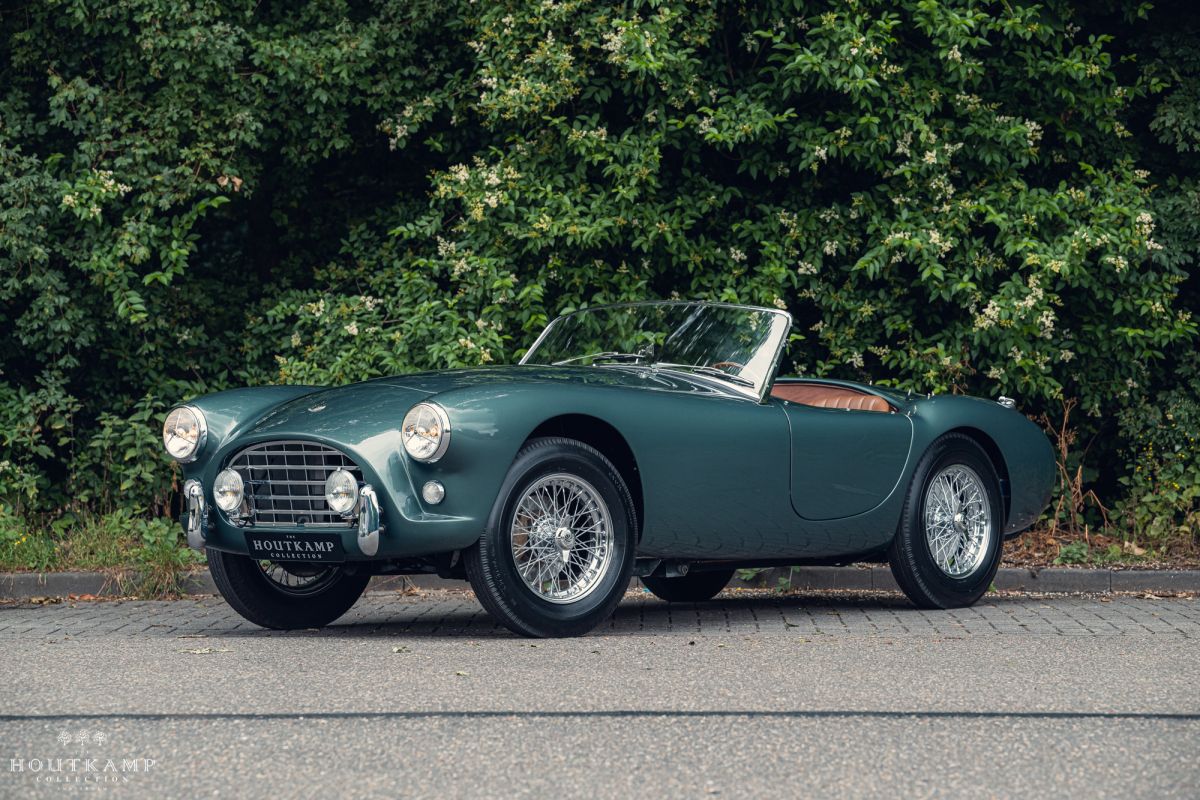
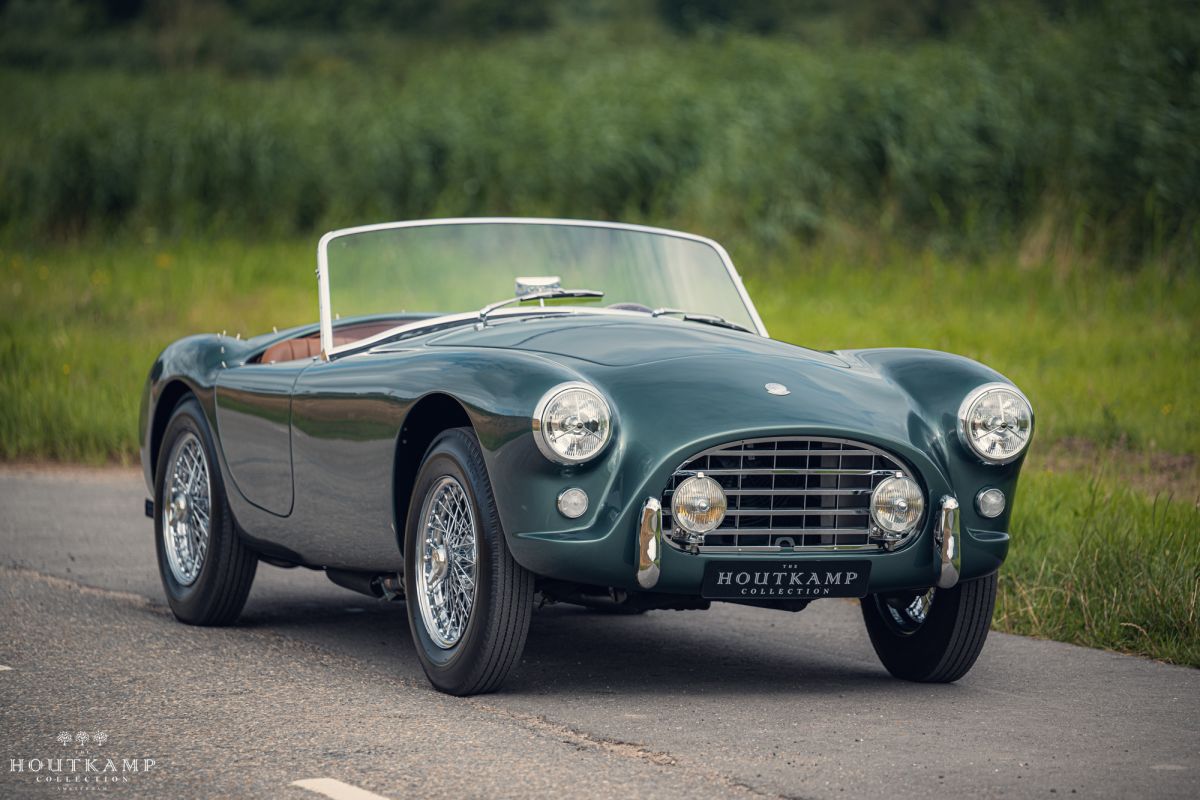
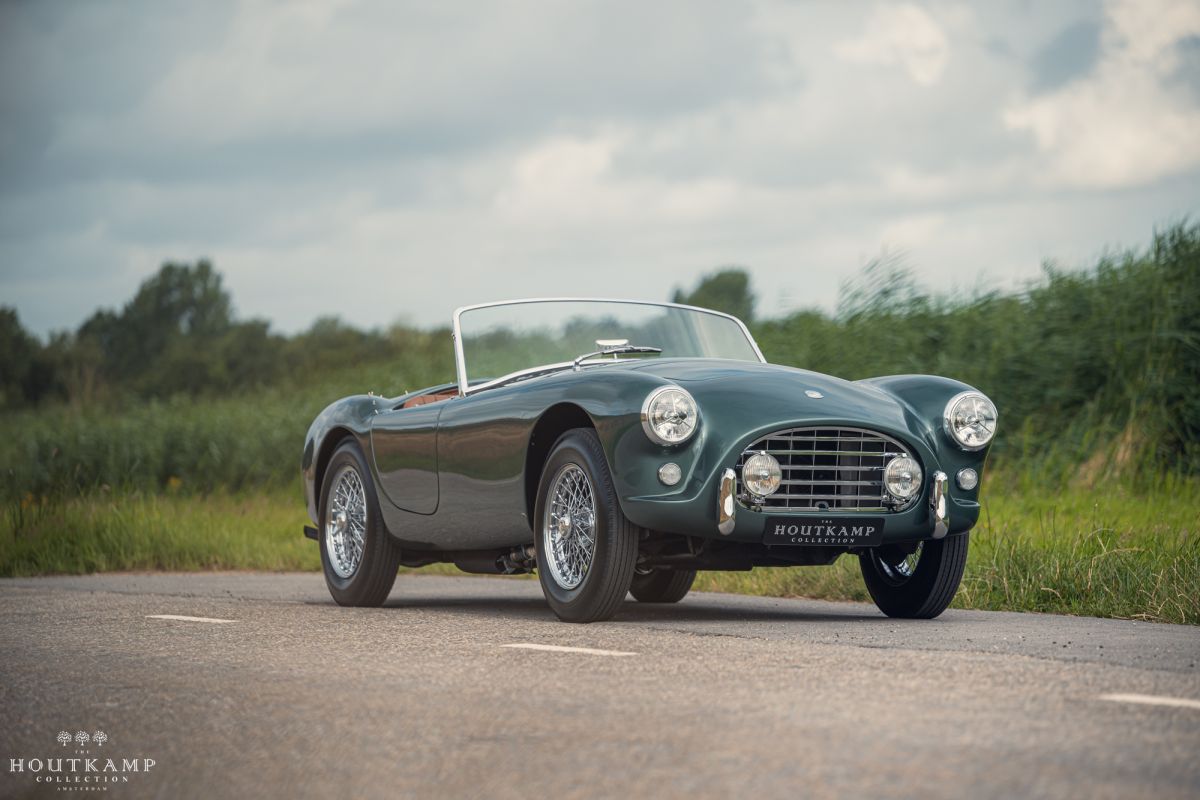
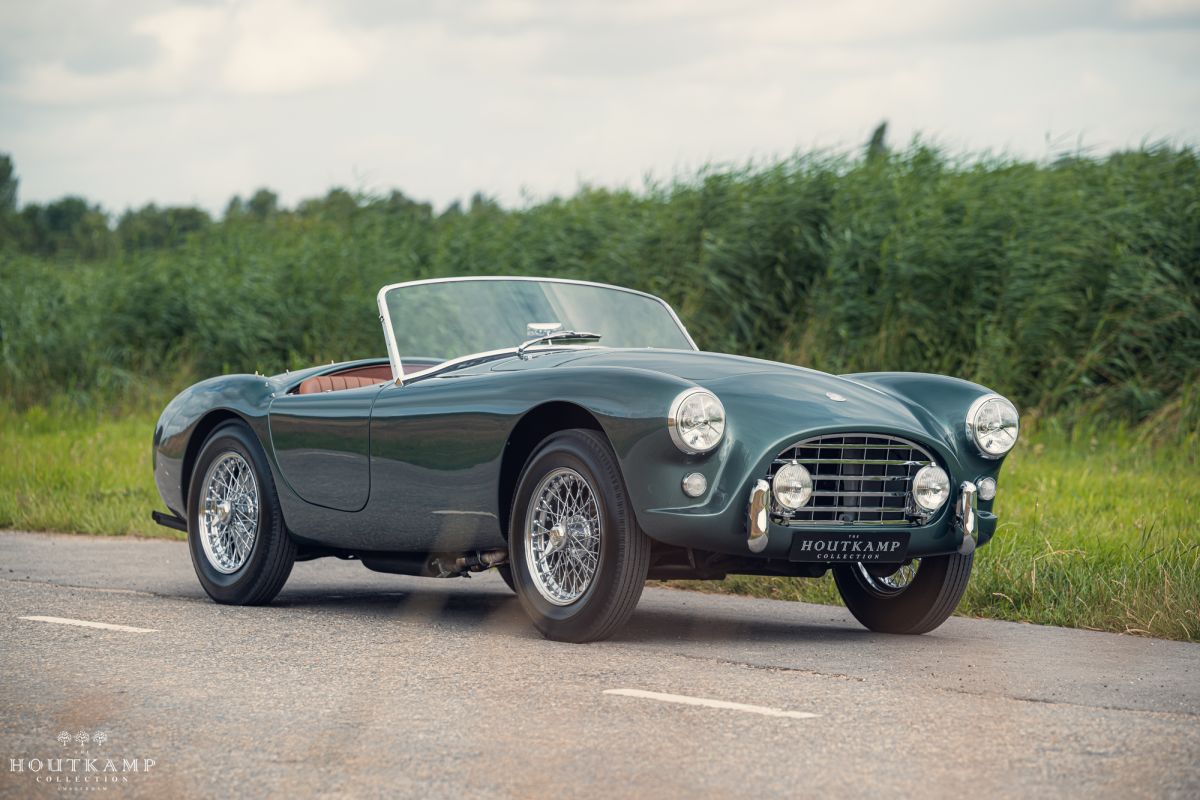
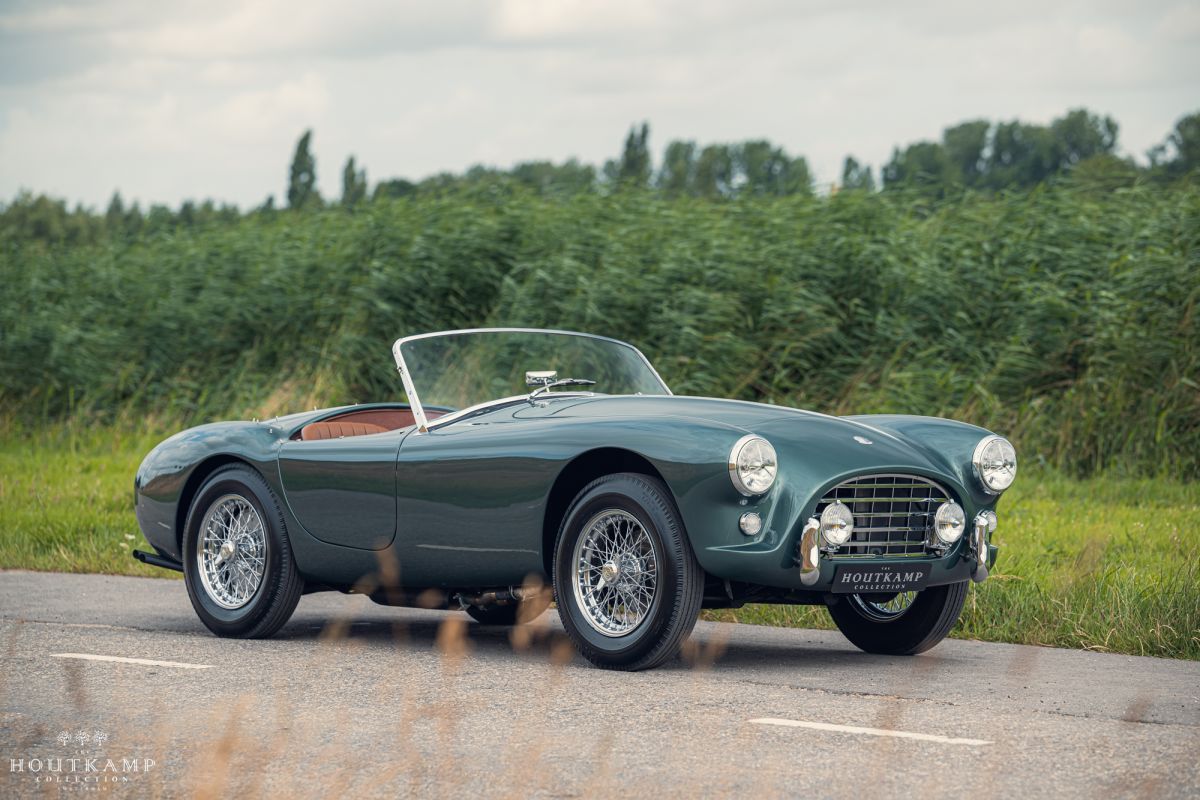
- This specific 1959 AC Ace Bristol stands out not just for its rarity but also for its eye-catching restoration
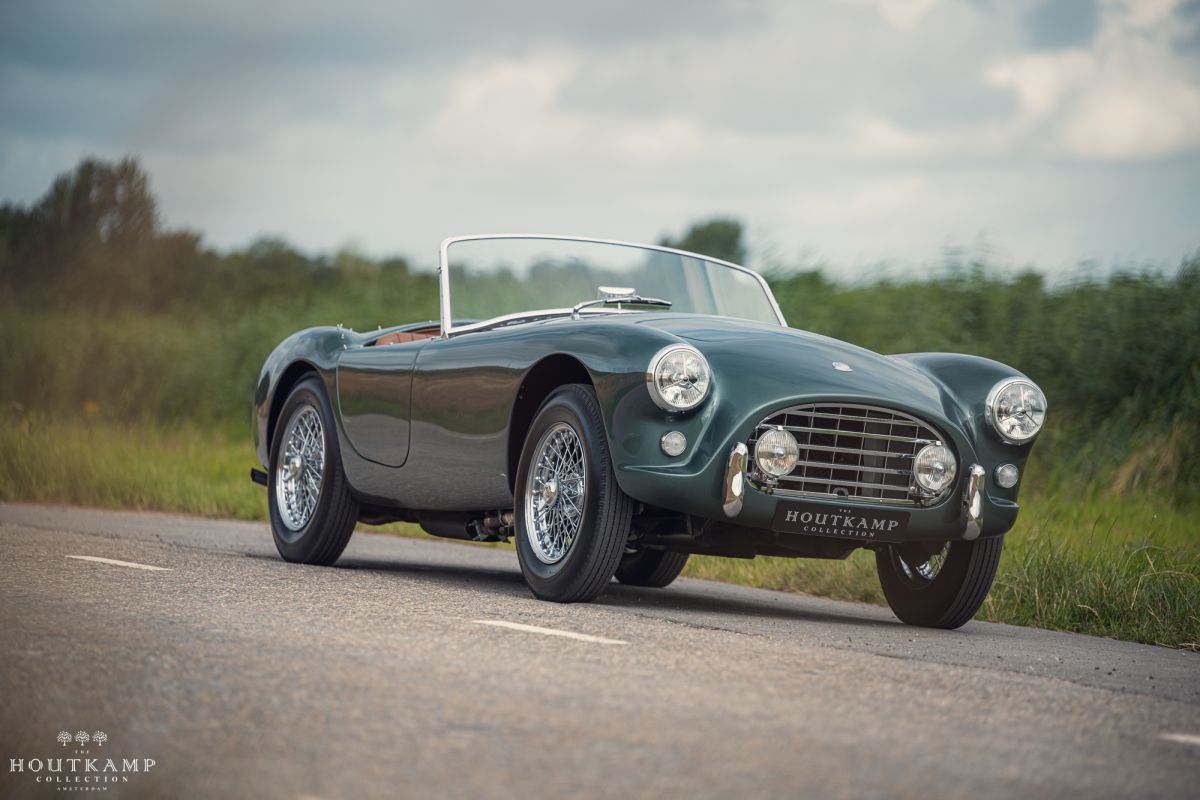
- The metallic green exterior, paired with the light brown interior, gives the car a refined, elegant look, while the restored engine ensures that the Ace retains its legendary driving characteristics
- The AC Ace Bristol was designed to combine the best of British engineering with the raw power of an American engine
- The design was crafted by John Tojeiro, a highly regarded British designer known for his work on the Ferrari Barchetta, one of Ferrari’s most iconic models
- The combination of its remarkable performance, striking looks, and engineering made the Ace Bristol one of the standout British sports cars of the 1950s and 1960s
AC Cars, established in 1901, has long been recognized for producing some of the most iconic British sports cars. The company’s original factory in Thames Ditton, Surrey, became the home of many of its legendary vehicles, including the AC Ace Bristol, one of the most celebrated models in AC’s history.
Introduced in 1956, the AC Ace Bristol was designed to combine the best of British engineering with the raw power of an American engine.
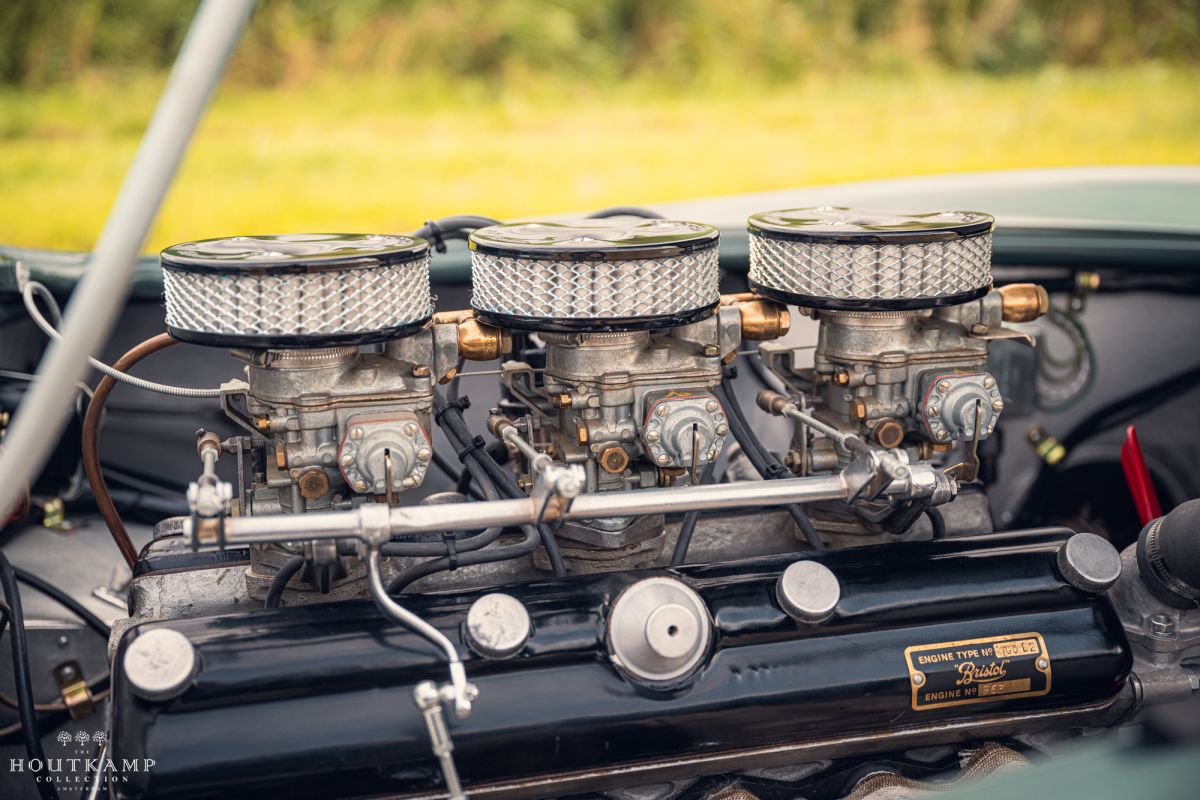
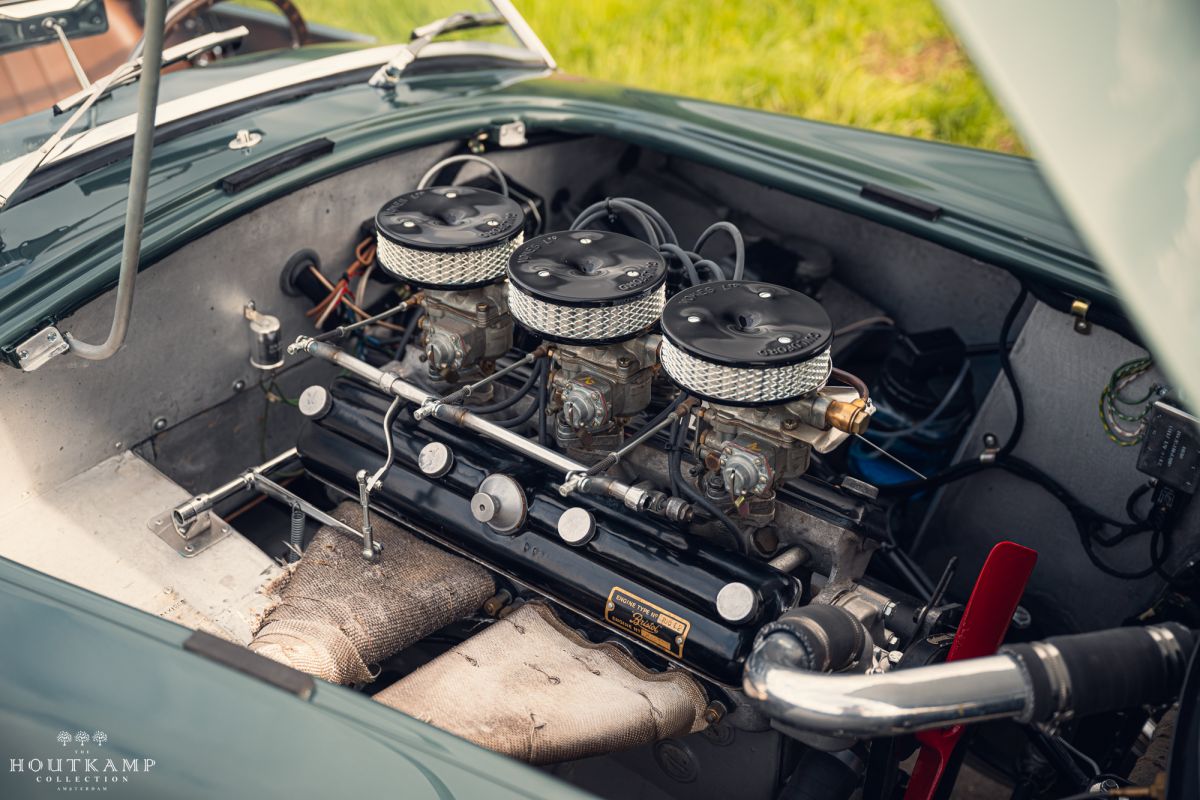
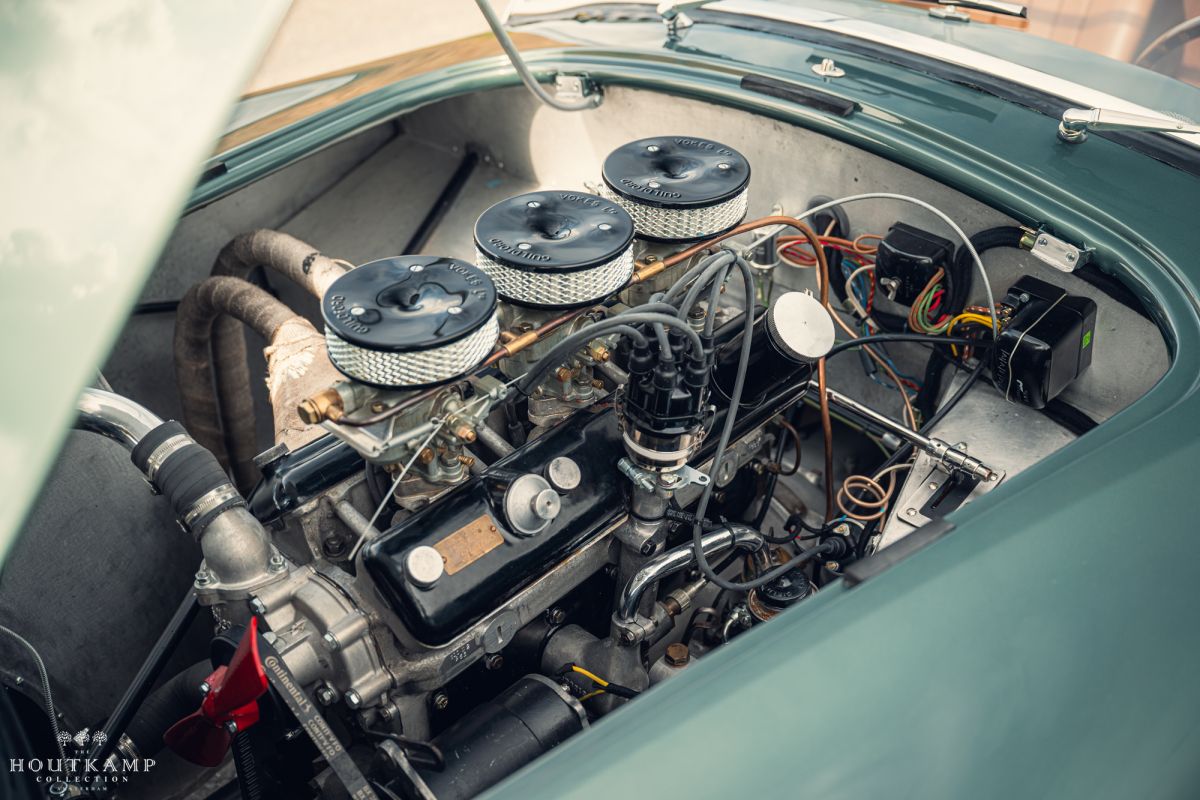
The car was powered by a 2.0-liter, six-cylinder Bristol engine, based on the famous BMW 328 engine but modified to produce 125 horsepower.
This allowed the Ace Bristol to reach a top speed of 116 mph (186 km/h) and accelerate from 0 to 60 mph (96 km/h) in just 9.1 seconds—impressive numbers for its time.
The design of the Ace Bristol was the work of John Tojeiro, a skilled engineer known for his work on racing cars. The car’s body was made of hand-formed aluminum panels, attached to a steel frame, which kept the car lightweight yet durable. This helped the Ace Bristol perform exceptionally well on the road, delivering great handling and speed.
While the Ferrari Barchetta became synonymous with Italian elegance and racing heritage, the AC Ace Bristol, with its similar design philosophy, brought the same level of engineering precision to British motoring.
On the race circuit, the AC Ace Bristol proved itself with notable successes, including winning its class at the 1959 24 Hours of Le Mans, one of the world’s most prestigious endurance races.
Between 1956 and 1962, AC produced just 465 units of the Ace Bristol, making it a rare car.
The combination of its remarkable performance, striking looks, and engineering made the Ace Bristol one of the standout British sports cars of the 1950s and 1960s.
Today, the AC Ace Bristol is still remembered as one of the most iconic sports cars of its era. It represents the perfect blend of performance and style, a true classic that continues to captivate car enthusiasts and collectors around the world.
The AC Cobra was later born when American car designer and racing enthusiast Carroll Shelby came across the AC Ace during the early 1960s. A car that would go on to write its own legendary story in automotive history.
ABOUT THIS SPECIFIC EXAMPLE
This specific AC Ace Bristol, is a remarkable example of British automotive engineering, and its journey through time is as captivating as the car itself.
Initially finished in Valentines Blue, it was first owned by Mr. Jack Fernandez from Venezuela, where the car’s blend of beauty and performance captured the spirit of the era.
Valentines Blue was a deep, rich shade of blue with a subtle metallic finish.
The car left the AC factory on June 19th, 1959, destined to become a collector’s icon.
In the 1980s, the AC Ace Bristol, was owned by Mr. Alvis R. Acevedo, a resident of Caracas, Venezuela.
During this period the original Valentines Blue color was replaced with a striking metallic red.
In October 1989, the car changed ownership, passing into the hands of Mr. Luciano Capelli, who held dual Venezuelan and Italian nationality.
Mr. Capelli decided to transport the car to Italy, where it would continue its journey. According to the documentation, the car was shipped to Milan Malpensa, and from the details, it appears that it was transported by air, showcasing the care and importance given to the car during this transition.
During its time in Italy, the car underwent a comprehensive restoration, which was completed later in Belgium. The restoration process was thorough, addressing both the cosmetic and mechanical aspects of the car.
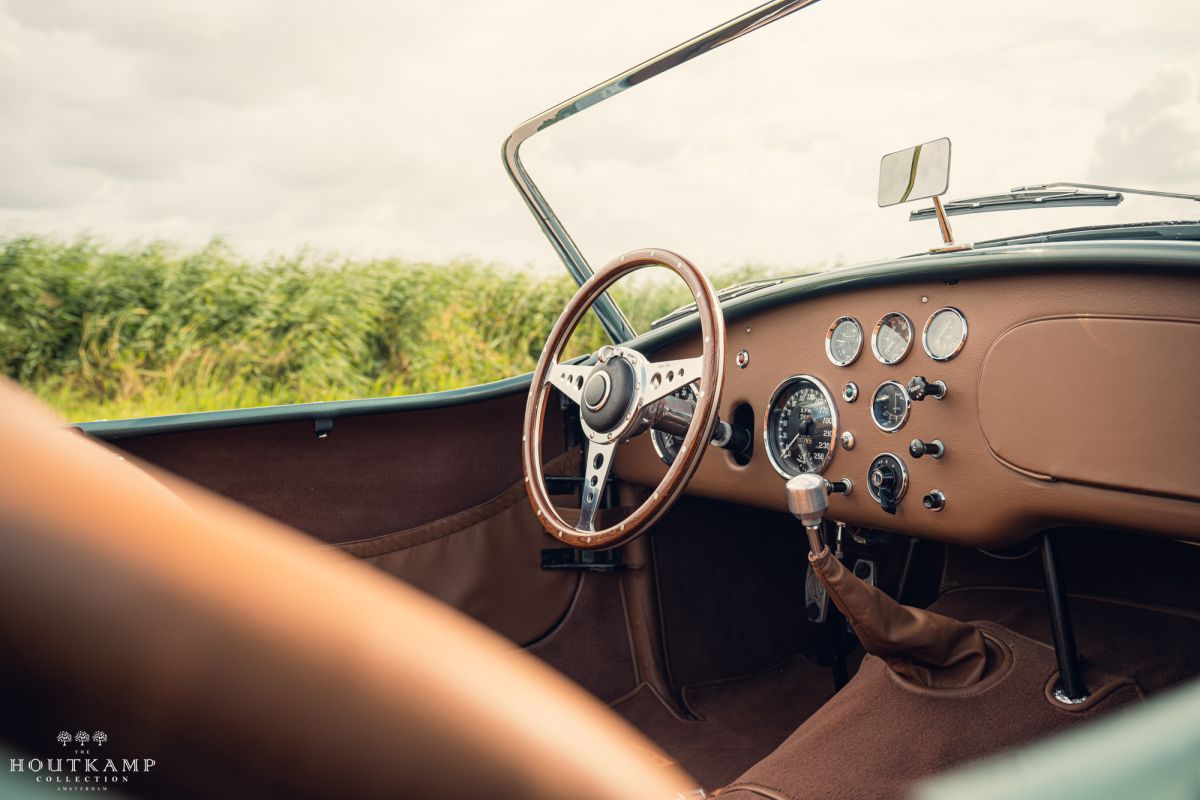
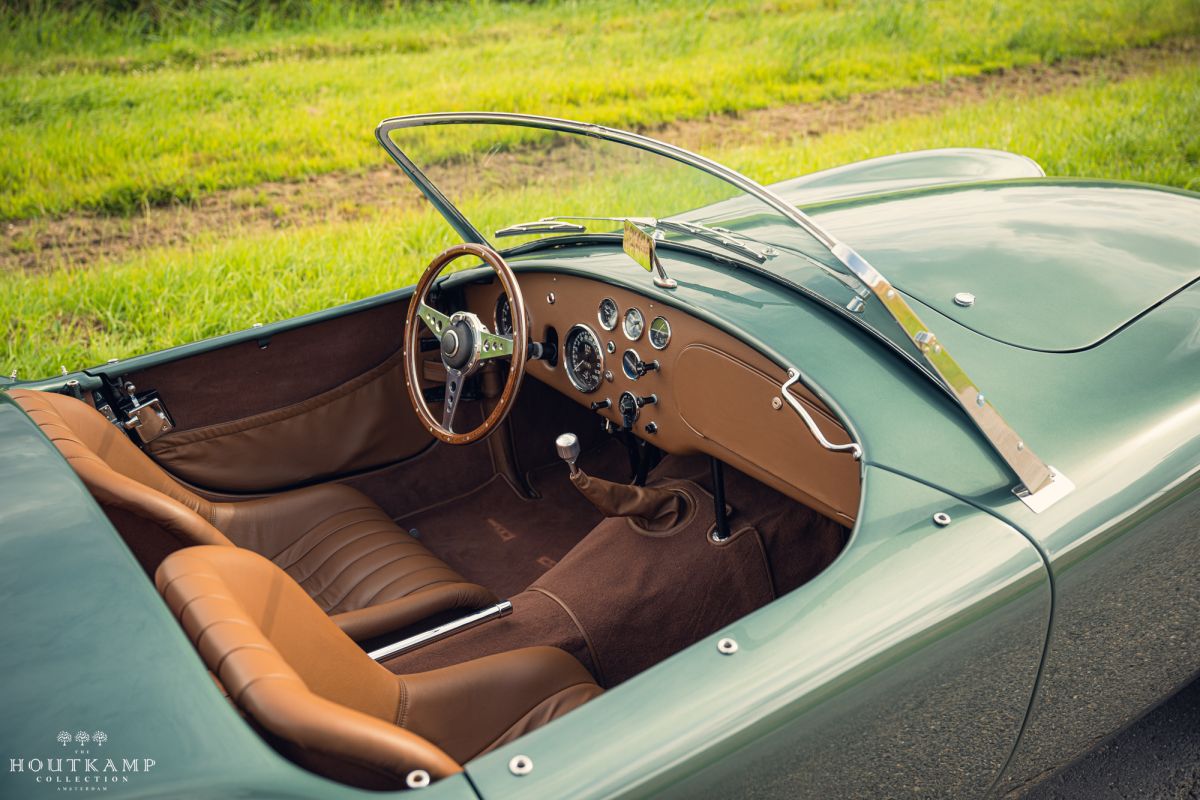
While the color was replaced by a striking metallic green, the car’s interior was reupholstered in a rich light brown, giving it a sophisticated, modern touch while retaining its classic charm.
What truly sets this AC Ace Bristol apart, however, is the wealth of photographs documenting the restoration process. These images provide a detailed look into the painstaking work carried out to bring the car back to life, showcasing every aspect of the car’s transformation.
From the meticulous engine rebuild to the refinishing of the bodywork, each photograph tells the story of a labor of love, a dedication to preserving the car’s heritage while enhancing its performance for the future.
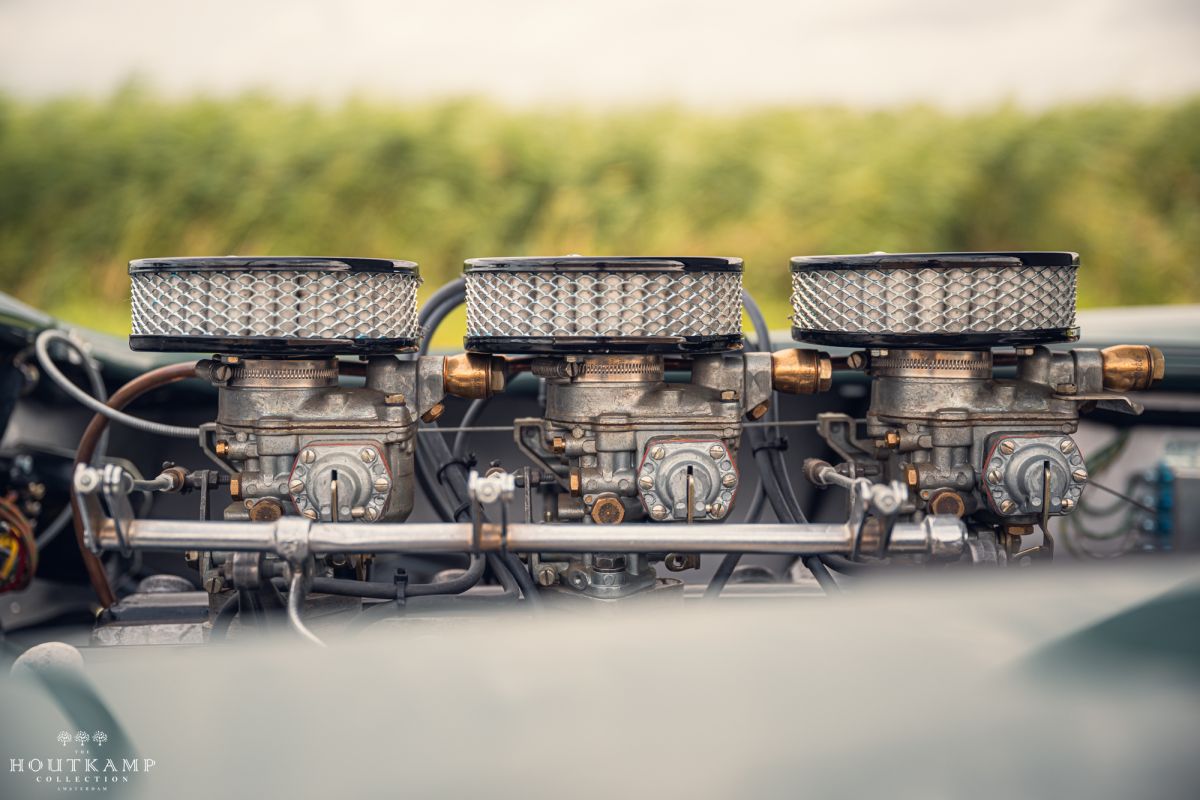
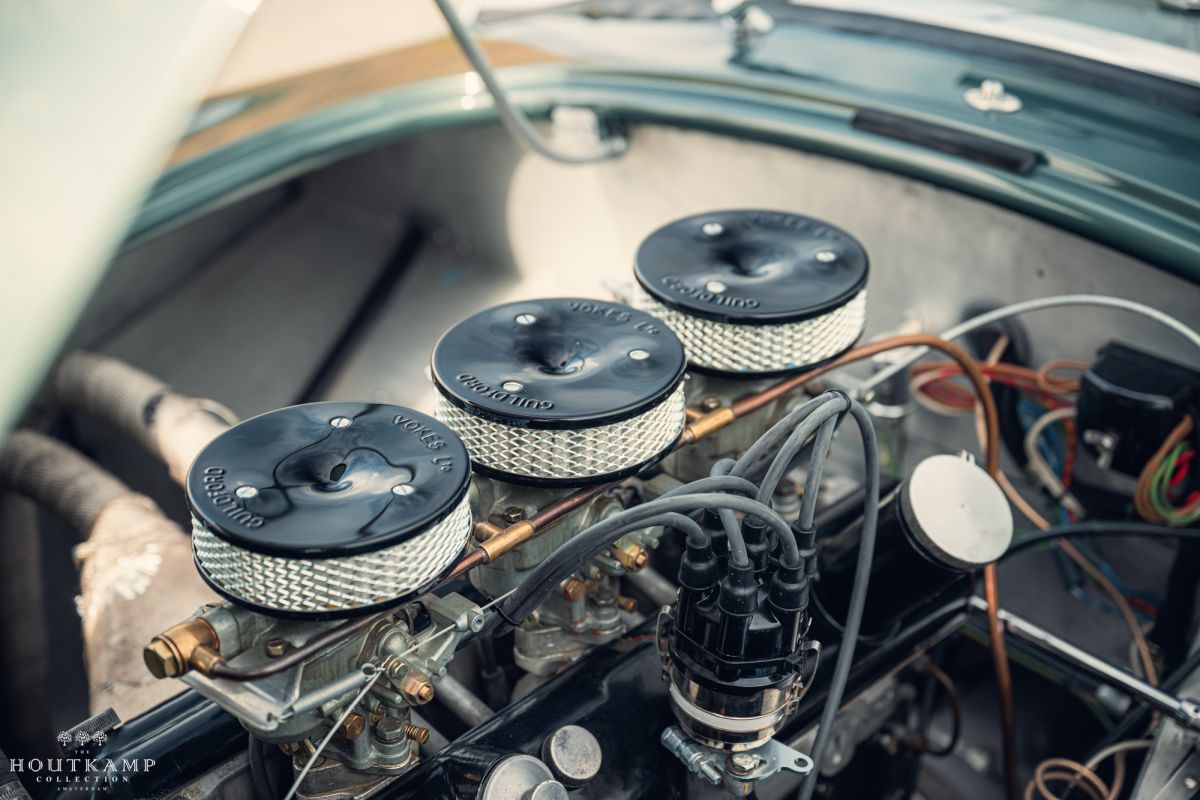
The complete engine rebuild ensured that the six-cylinder Bristol engine would deliver the same smooth power and performance as when it first left the factory, bringing the driving experience to a level worthy of its iconic status.
This example is a car that delivers both visual satisfaction and the kind of driving pleasure that any enthusiast would appreciate.
CONDITION EXTERIOR
The AC Ace Bristol presents itself in exceptional condition, a result of a thorough and careful restoration process. According to the history file, the car’s body was stripped down to bare metal, ensuring that every detail was addressed. The outcome is a stunning exterior that reflects the high standards and dedication involved in its restoration.
The metallic green paint is one of the car’s most striking features. When the sunlight hits the surface, it shines with a deep, rich luster that makes the car stand out from any angle.
The chrome elements on the car are in flawless condition. From the bumpers and grille to the window trim, everything has been carefully restored and polished to a mirror-like shine.
The body gaps, between the doors, boot, and bonnet, are perfectly aligned, showing the precision with which the restoration was carried out.
CONDITION INTERIOR
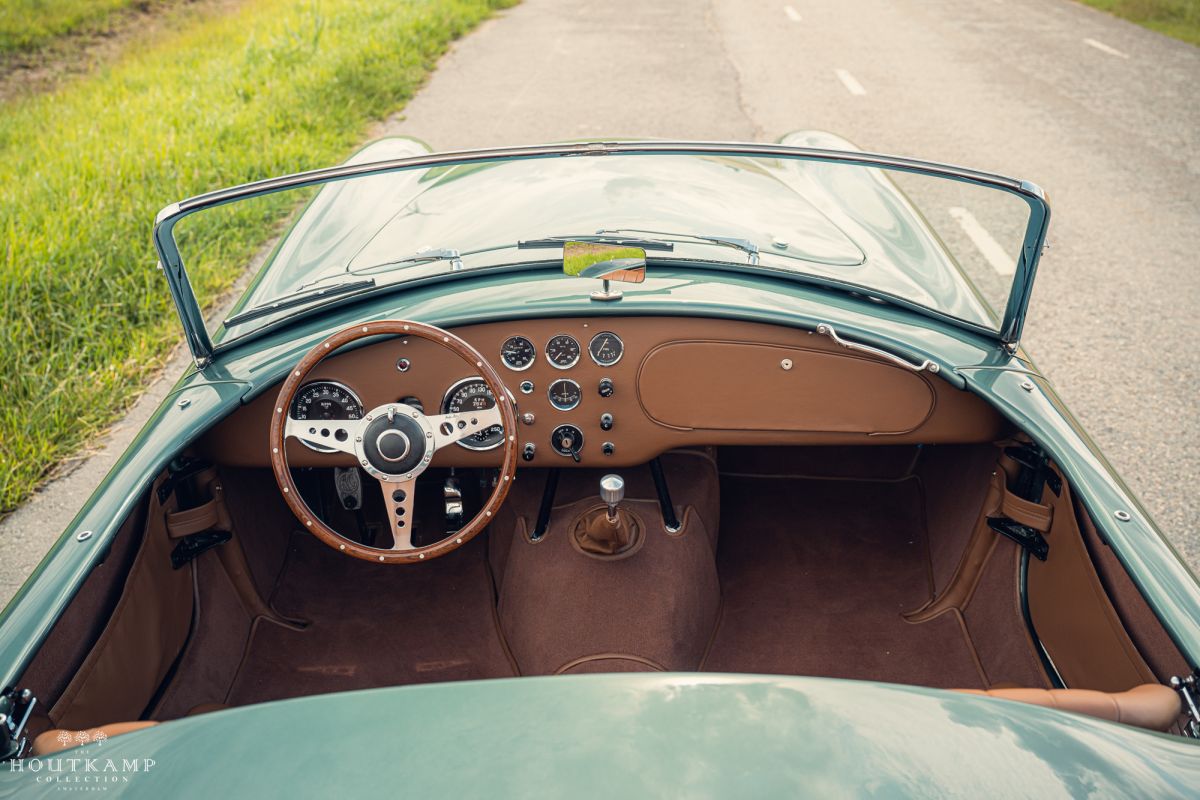
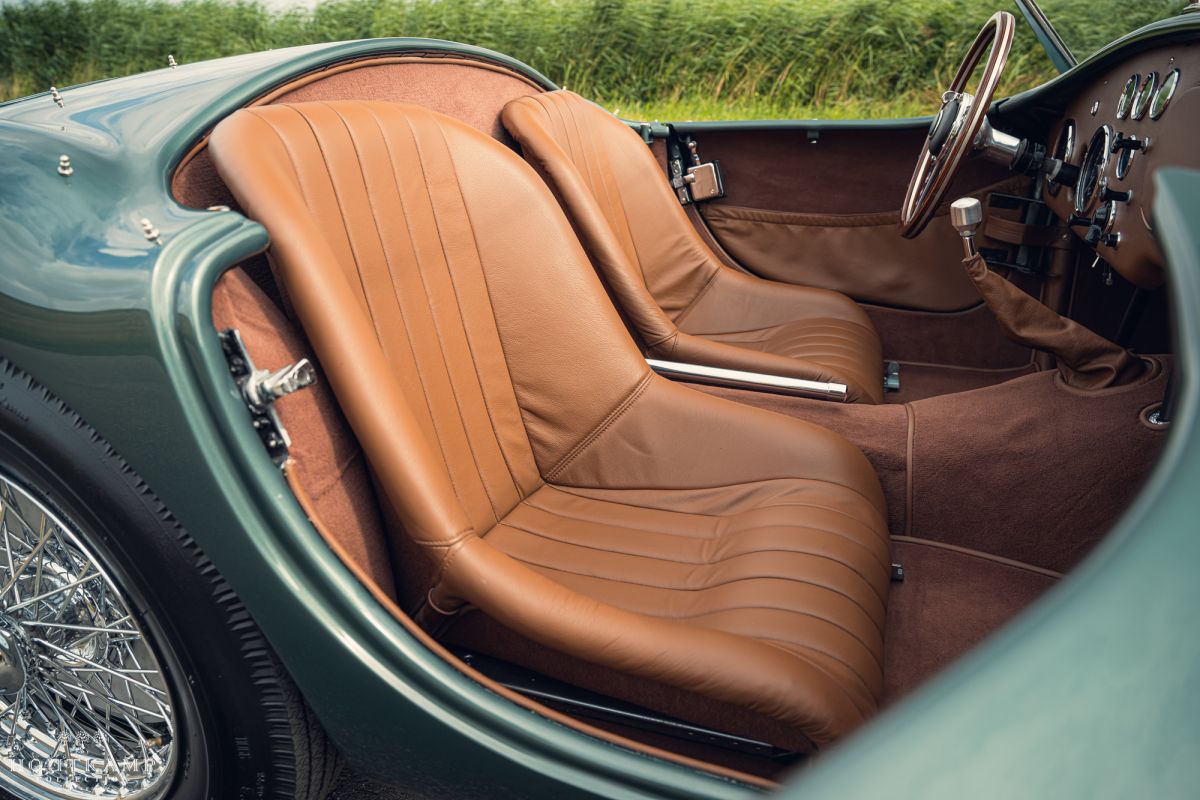
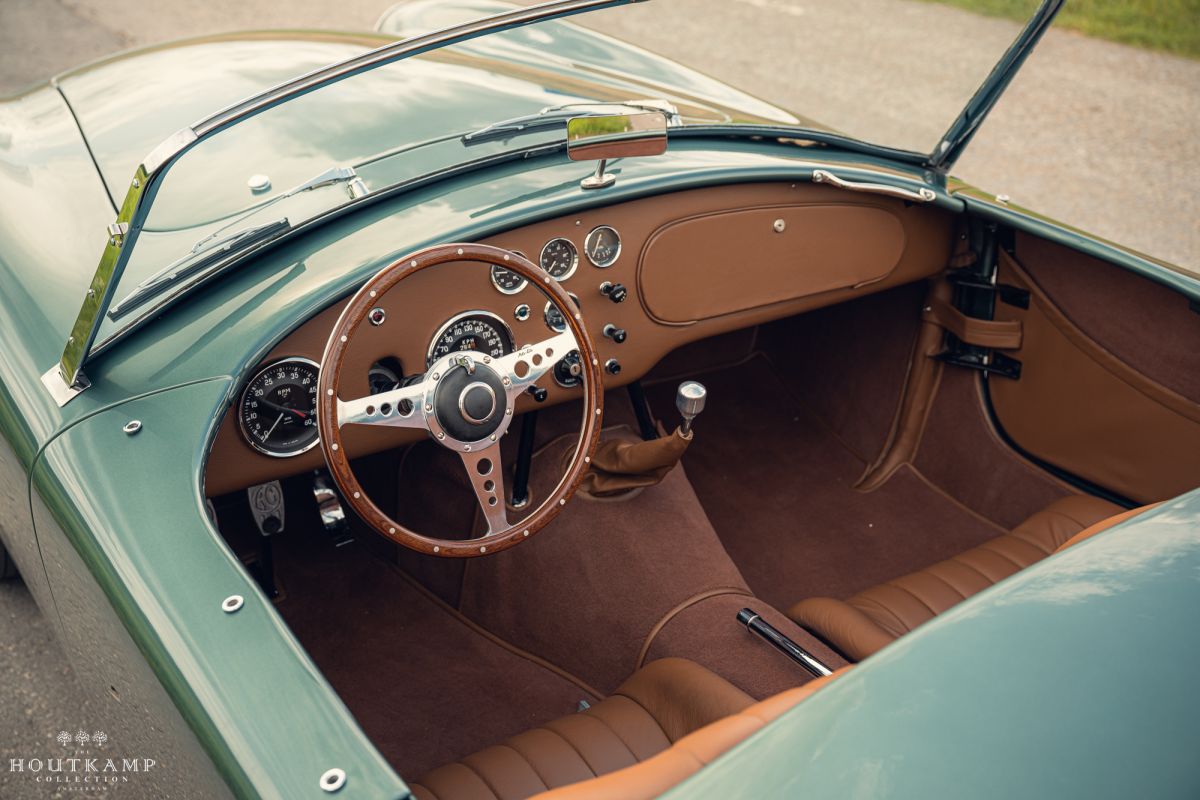
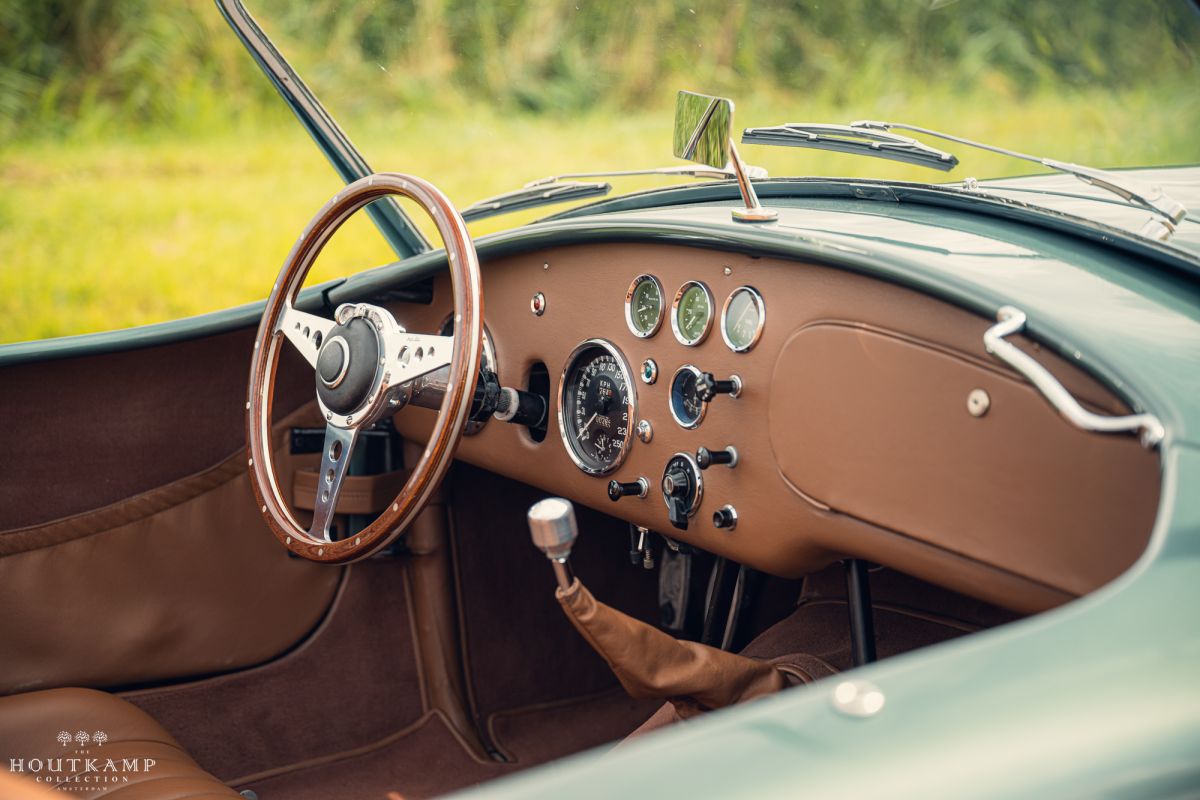
The interior of the AC Ace Bristol offers a refined and welcoming space, perfectly blending classic British design with an understated sense of luxury.
After its meticulous restoration, the cabin now reflects the car’s original elegance while providing an upgraded, comfortable environment.
The two bucket seats light brown leather upholstery is the first feature to catch the eye. The seats have been carefully reupholstered, and the rich, soft leather feels inviting to the touch.
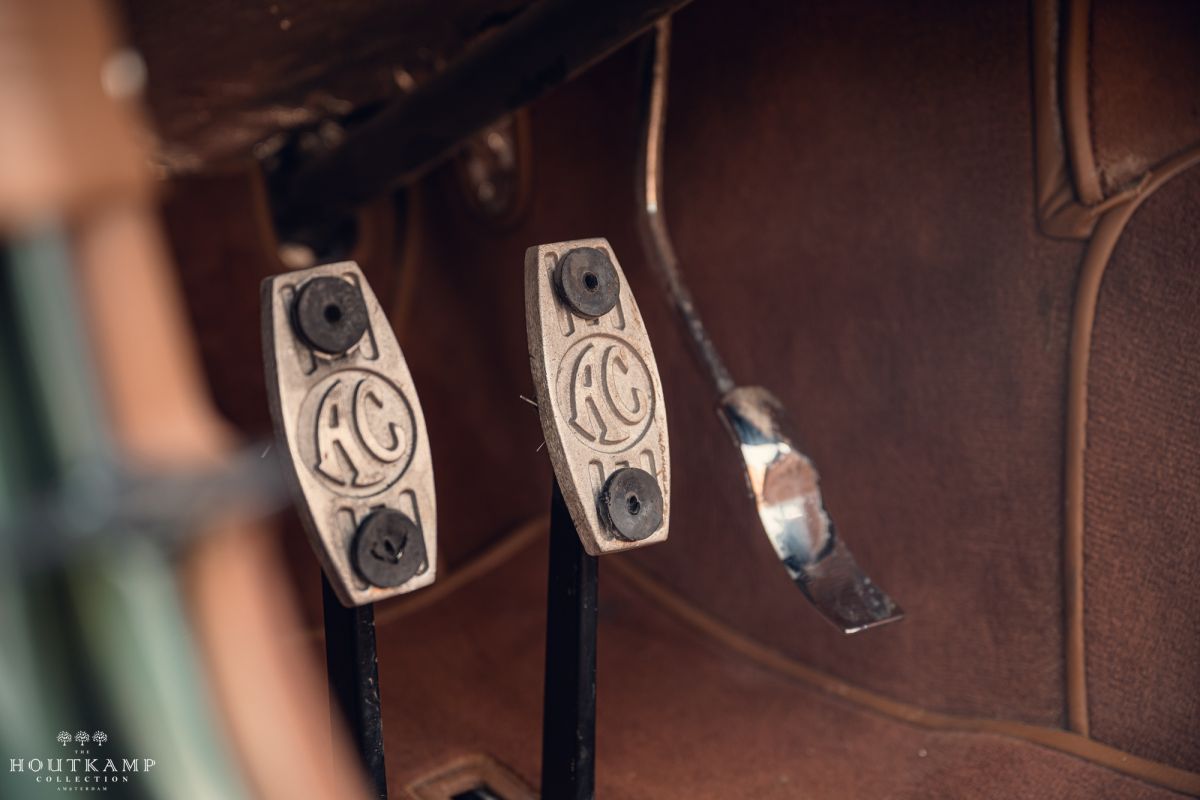
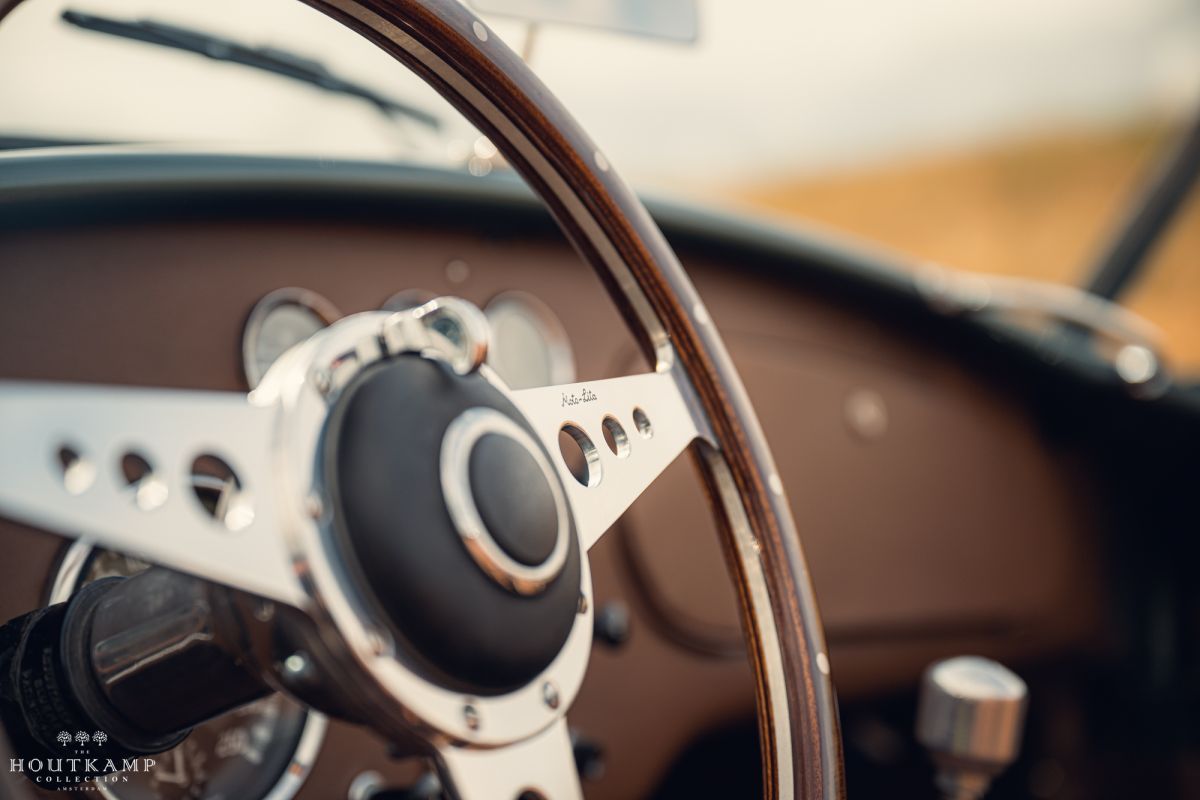
The gear shifter is leather-wrapped, reflecting the car’s attention to detail, while the surrounding leather and carpeted areas give the cabin a refined yet functional touch.
DRIVING EXPERIENCE
Driving the 1959 AC Ace Bristol is a sublime experience.
The steering is direct, offering a pure, tactile connection, while the Bristol engine purrs to life with a smooth, exhilarating power.
The car’s lightness and agility make every corner feel effortless, while the tactile gear shifts remind you of its racing heritage.
It’s as if the car anticipates your next move, making the drive feel intuitive and immersive.
It is a celebration of motoring at its most exhilarating, a reminder of what it means to be truly alive behind the wheel.
The AC Ace Bristol is not just beautiful, it’s also remarkably rare and highly prized among collectors.
According to historical production data from AC Cars archives and enthusiast sources, a total of only about 463–466 Bristol‑engined AC Aces were built during the entire Ace run from 1956 through 1962, making the Bristol‑powered version significantly rare.
Estimates from private registries and club records suggest that just 40–45 examples were left-hand drive examples.
This scarcity, combined with its historical significance and performance pedigree, contributes greatly to its strong collectible appeal.
This specific 1959 AC Ace Bristol stands out not just for its rarity but also for its eye-catching restoration.
Disclaimer
The information provided on this website has been compiled by The Houtkamp Collection with the utmost care. The information contained within this advert is provided ‘as-is’, without warranties as to its accuracy whether expressed or implied and is intended for informational purposes only. The Houtkamp Collection is not liable for any errors or mistakes.

The Houtkamp Collection
1191 KN Ouderkerk aan de Amstel - Holland NL
+31 (0)6 2509 8150
https://houtkamp.nl/

OldLuxury 24 declina ogni responsabilità in ordine ad eventuali annunci falsi, ingannevoli e/o mendaci, e si riserva comunque ogni e più opportuna iniziativa, anche risarcitoria, nei confronti dei trasgressori.